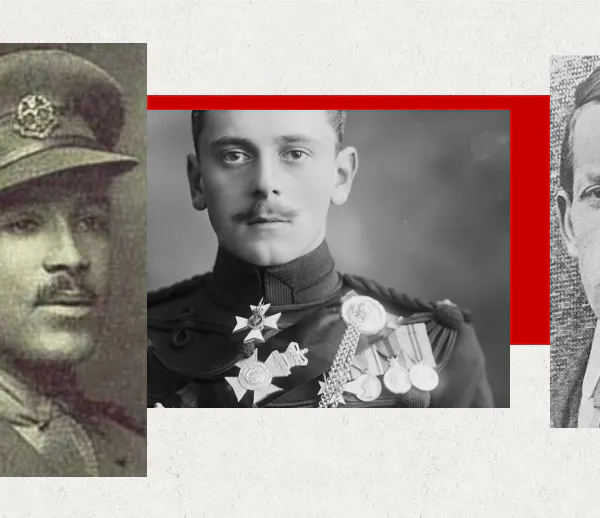
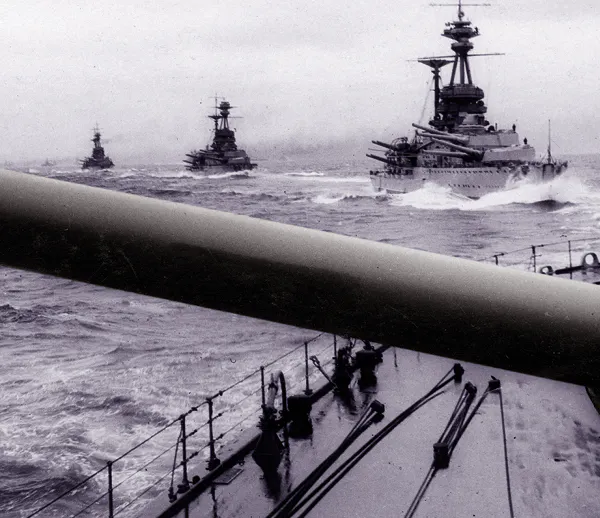
Delve deeper into the experiences of an everyday First World War soldier
10+ minute read
By Ellie Ayton | October 21, 2025
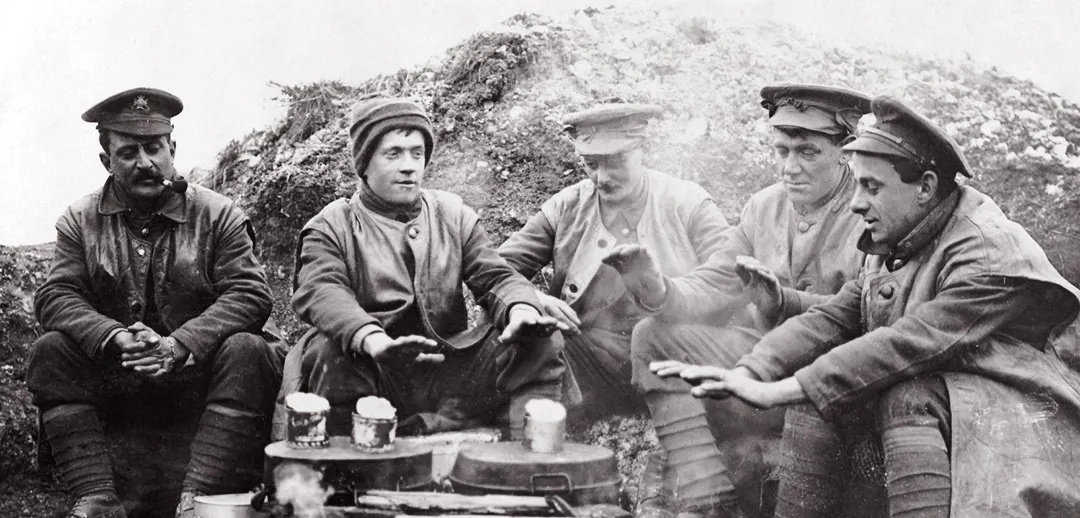
Taken from letters and war diaries, this is what life was like for First World War soldiers - from enlistment to brave frontline fighting.
Imagine the thundering beat of an excited heart as your great-grandfather signed his enlistment papers, after waiting in line for hours with his friends. That thunder would soon become gunfire in the trenches.
By examining his experiences, we can paint a richer picture of what life was like for the average First World War soldier, affectionately known as 'Tommy'.
Many of us have a First World War ancestor in our family tree. Stories may have been passed down in your family, or you may have already searched service records and medal rolls. Finding their service number and regiment is just the start. To delve deeper into their story, you need to put yourself in their shoes.
Army recruitment and conscription
When war was declared in July 1914, queues of enthusiastic men snaked around Britain's recruitment offices. By 12 September 1914, around half a million men had enlisted. These early months also saw the formation of Pals battalions, where men who lived and worked together were given the incentive to serve in the same units.
23-year-old policeman Arthur Smith Molyneux from Walton in Lancashire was one of the thousands of men who enlisted in 1914. On 7 September in Liverpool, he joined the Royal Horse and Field Artillery as soldier 25214.
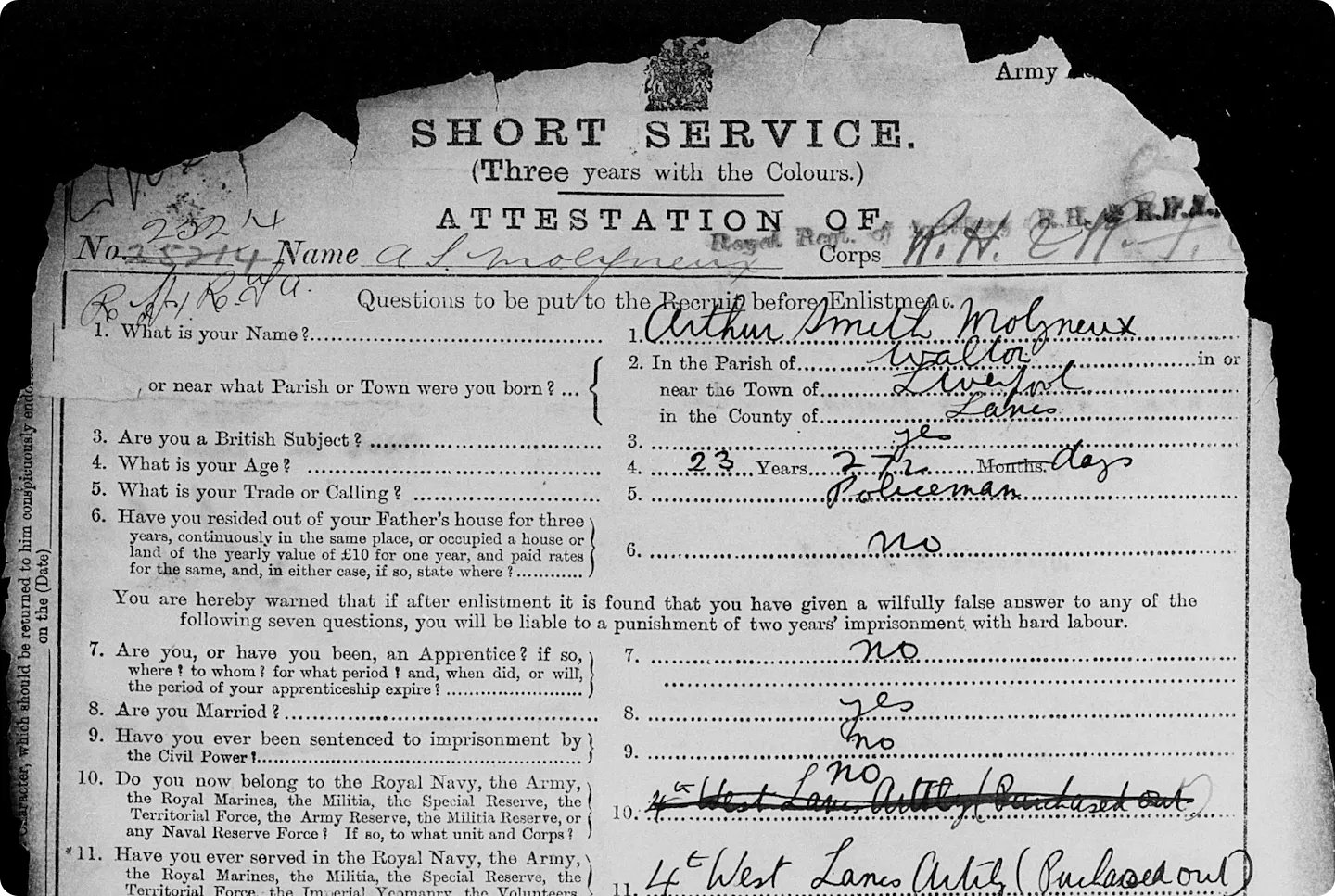
A page from Arthur's service record. You can view the full record here.
He went on to serve in Alexandria with the Expeditionary Force between 2 July 1915 and 5 March 1917. During that time, he was promoted to sergeant, suffered from trench fever and the effects of a gas attack, and spent time convalescing in hospitals in Nottingham and Eastbourne.
For many, the recruitment office experience would be much the same: the men would present themselves to a recruitment officer, undergo a medical examination, a swearing-in, complete enlistment papers, and receive their new kit.
The young men who volunteered around this time first saw major action during the Gallipoli Campaign or at the Battle of Loos. After a year and a half of warfare, volunteer numbers dwindled, and conscription was introduced in January 1916.
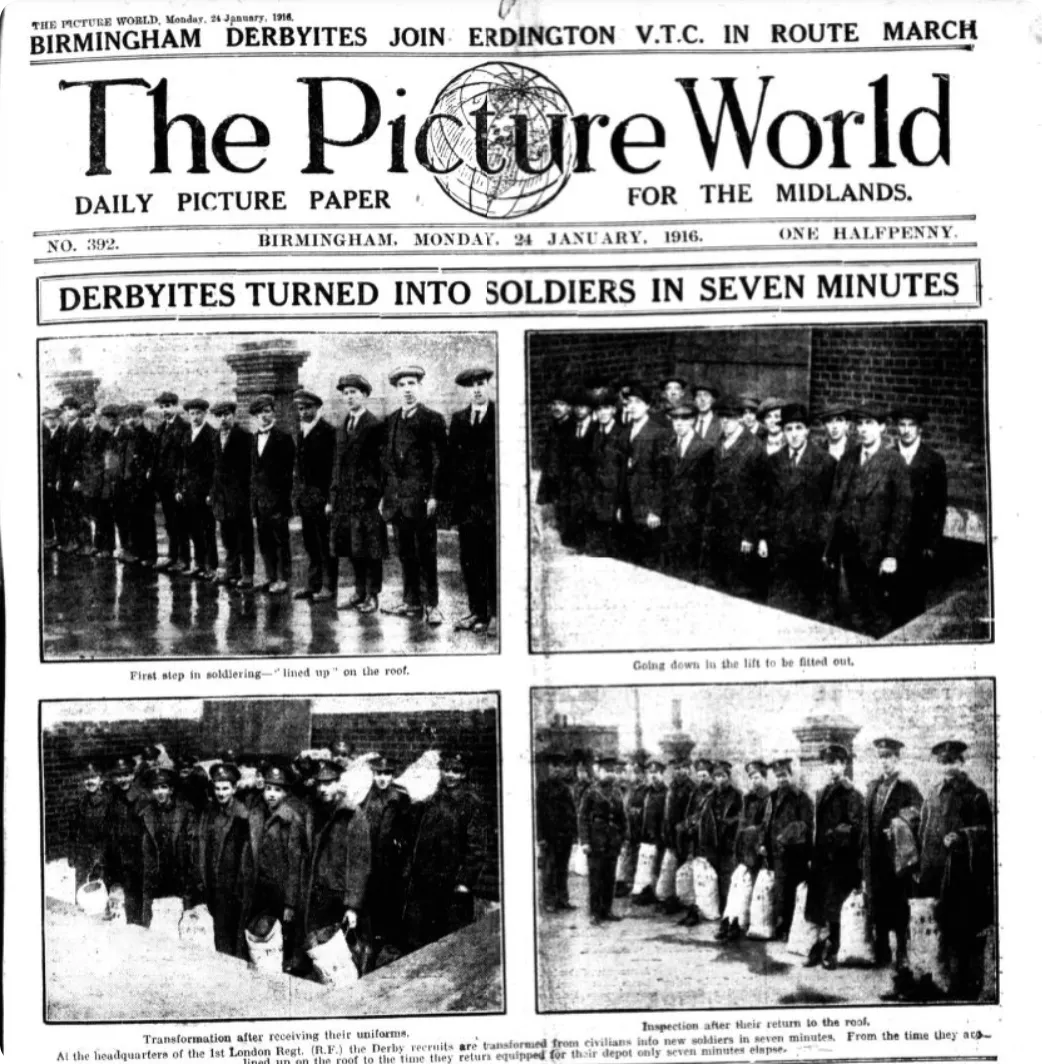
In Derby, young men could be transformed from civilians to soldiers in seven minutes. From The Picture World, 24 January 1916.
Enlistment or conscription was just the start of Tommy's journey...
'An army in the making': soldiers training for war
After enlisting came training. A lack of kit, weapons, and officers to train the recruits led to a scramble for supplies. In fact, particularly at the beginning of the war, Tommy would most likely have undergone training in his own clothes.
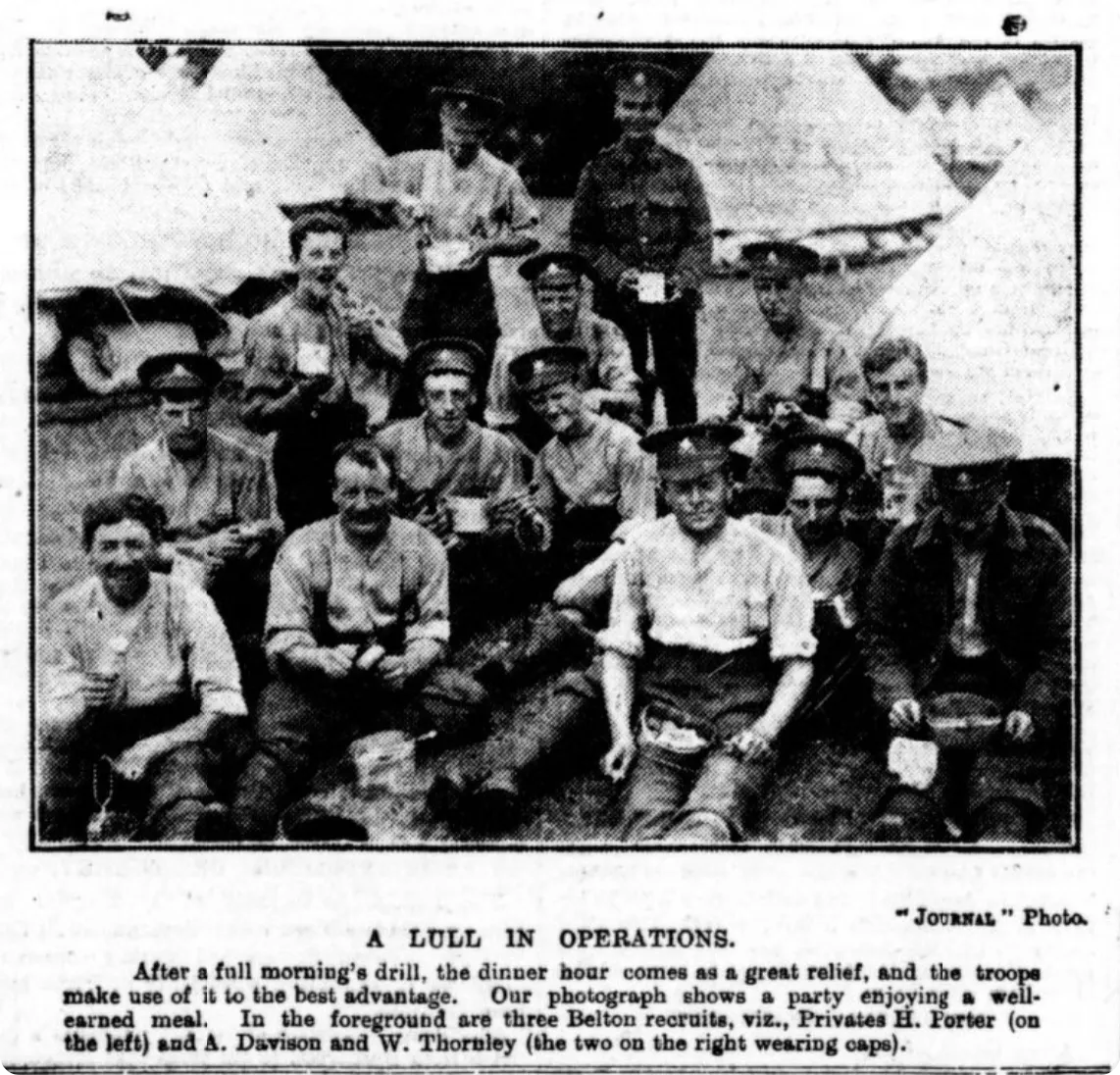
Tommies resting after a morning of training in Belton, from the Grantham Journal, 12 September 1914.
Often for the first time in their lives, young men left their homes for training camps all over the country. In their droves, the recruits travelled by train to learn what it meant to be a soldier. This quote from the Brighton Gazette, 26 September 1914, describes the scene:
"Eager faces line the railway carriage windows... the raw material for the new Army. There are no uniforms, no rifles; it is an Army in the making."
The atmosphere was jubilant. Men in tweed coats and cloth caps sang It's a long way to Tipperary as they headed from training to dinner. They would parade at 7:30am, breakfast at 8, and drill from 9 until noon. The locals heard dialects from all over - 'Yorkshire, Welsh, Lancashire, Cheshire, and a dozen others one cannot designate.'
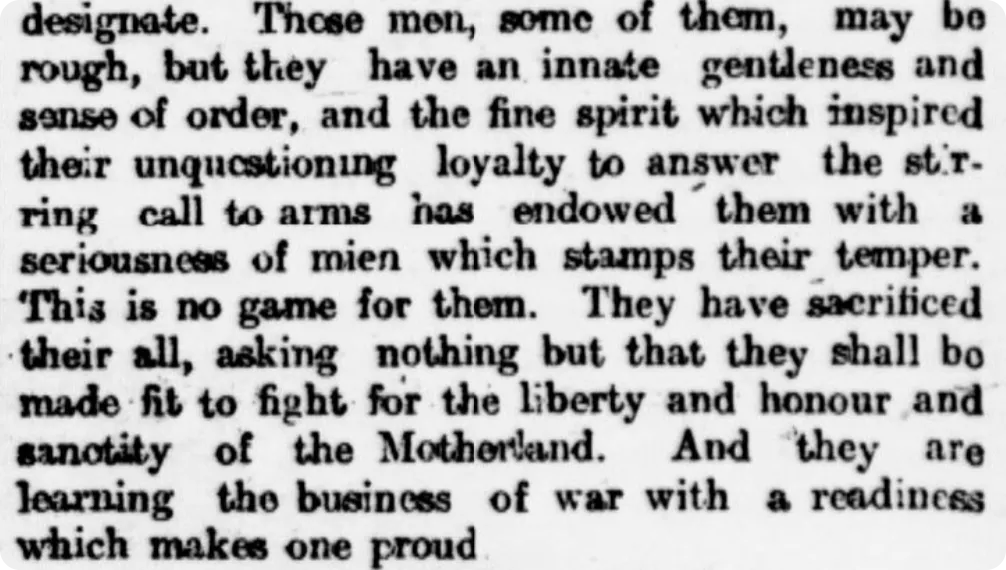
The locals of Lewes in Sussex described the First World War soldiers who were training nearby, from the Brighton Gazette, 26 September 1914.
In 1916, another article commented:
"In the old days, it took between 12 and 18 months to convert a raw recruit into a Tommy thoroughly fit for the field. Nowadays, the official time for the transformation is just about six months... The recruit of today puts in over twice as much work as his pre-war predecessor."
The article detailed the typical Tommy's first day of training, which included drill instruction, musketry, gymnastics, and running, as well as practical aspects such as discipline and sentry duty.
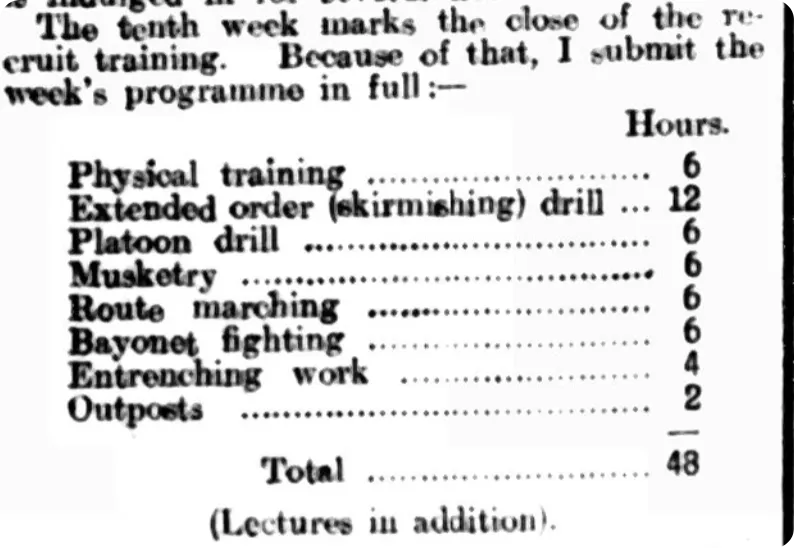
The article also included a breakdown of a typical day, such as the table above from week 10 of Tommy's training, from the Wishaw Press, 10 March 1916.
After their short period of training, it was time for servicemen to join the British Army abroad.
'It looked just like a firework display': soldiers posted to the Front
The First World War saw fighting across the world; most British Army soldiers experienced action on the Western Front in France and Belgium, whilst others fought in Italy and Salonika. Other units were stationed in the Middle East, Africa and Mesopotamia.
The frontlines of war greeted Tommy with mud, fear, and the unrelenting thunder of guns.
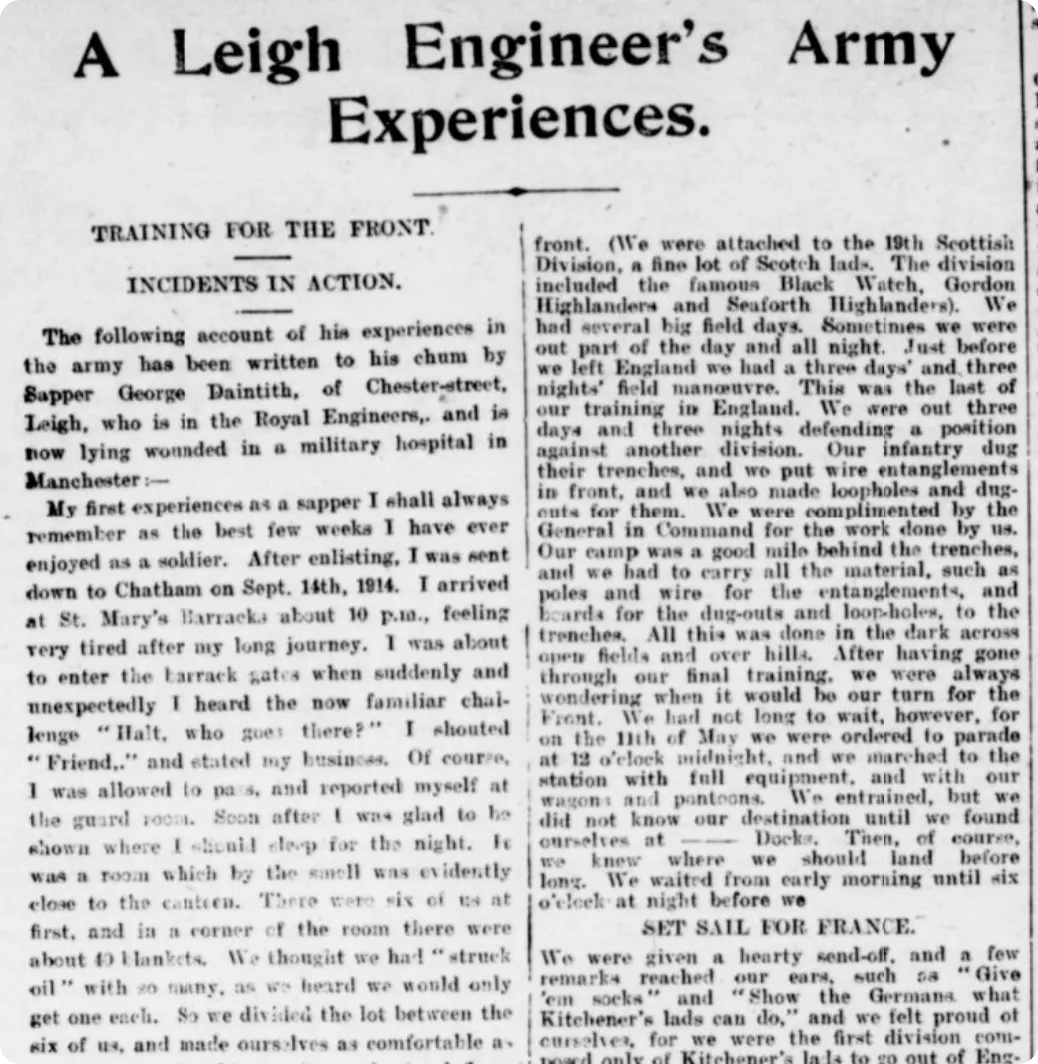
The experiences of Sapper Daintith, preserved in the Leigh Chronicle and Weekly District Advertiser, 10 December 1915.
After being wounded in 1915, Sapper George Daintith, a Leigh engineer, described his early soldier experiences, from training to being posted. He mentioned their 'hearty send off' before setting sail for France, and the two days of rations for their long journey in covered trucks to the Front.
Once arriving at their destination, George remarked, 'We knew we were not far from the firing line, as we could hear the big guns booming.' They spent the next few nights in barns, and one night he described as 'very lively, as there was an artillery duel going on not far off between our artillery and the Germans... In the distance along the line of trenches, it looked just like a firework display. Star shells were bursting all along the line, and they lit up the sky all around.'
'Waist-deep in water': the trenches of the Western Front
By late 1914, trench warfare had become the norm for First World War soldiers in France and Belgium. The war on the Western Front had reached something of a stalemate.
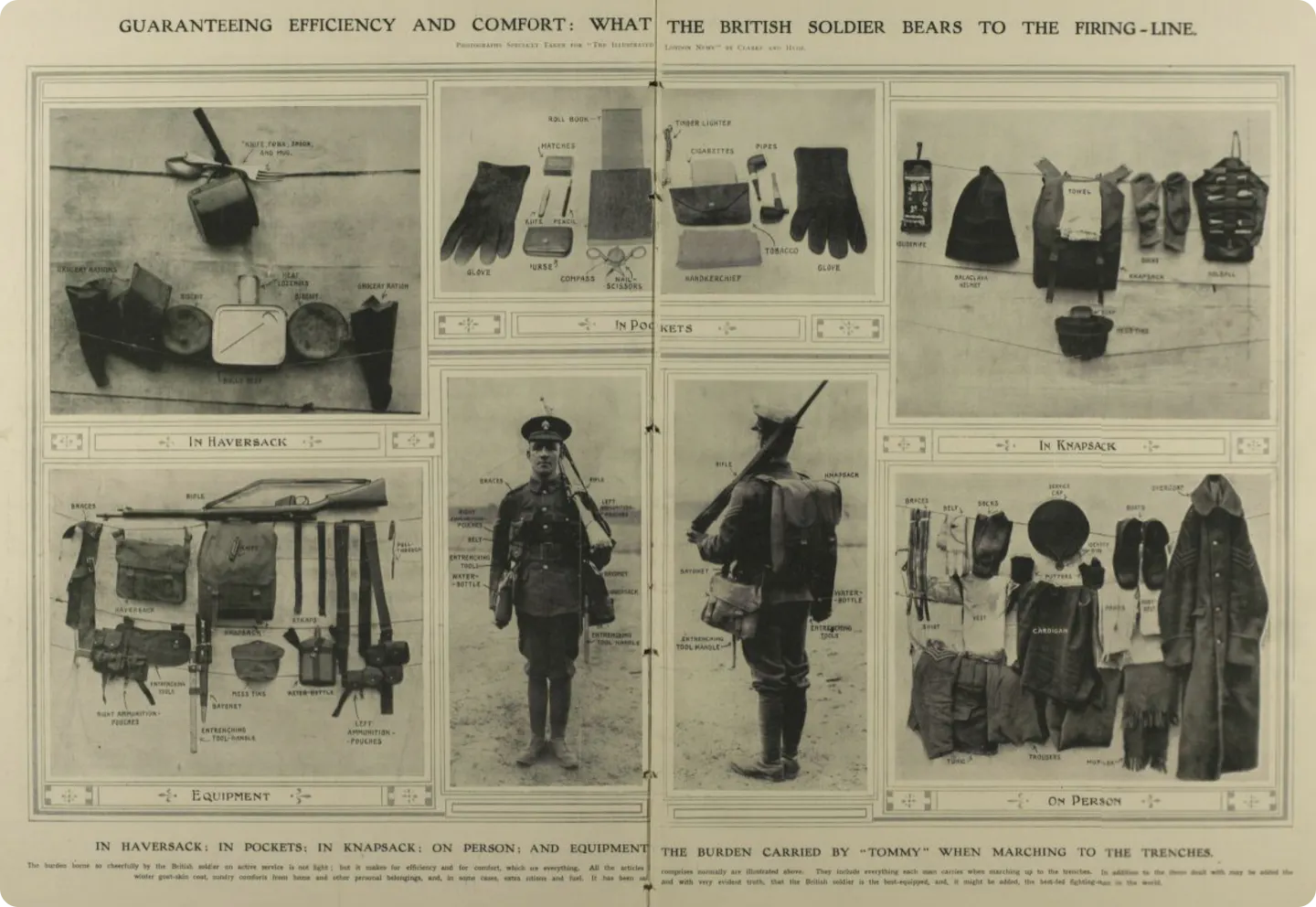
A typical Tommy would carry all of this on his person, from the Illustrated London News, 27 February 1915.
British Tommies could expect to be in a front line or reserve trench for around eight days at a time. In the trenches, life became a blur. Tea brewed underground, while letters from home were read by shivering hands.
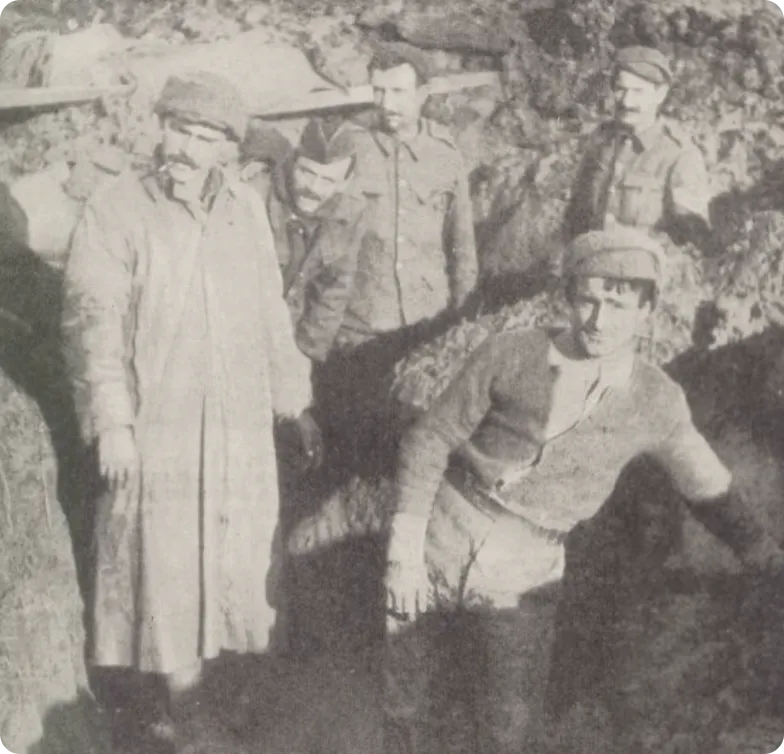
Sunshine arrives in the British trenches after weeks of persistent rain, from The War, 23 January 1915.
The threat of shells, mortars and bullets was ever-present. The conditions were harsh - wet, muddy, cold, and lice and rats carried disease.
Sapper George Daintith described life in the trenches.
"A mile of the communication trench was waist-deep in water, and shells were bursting over our heads. We had to climb over some places where sandbags had been knocked down by shells... The place around here smelled awful. There must have been hundreds of dead bodies buried all around."
A typical day for a Tommy in the trench would involve waking an hour before dawn and heading to man their positions - just in case of a dawn raid. Next came breakfast, washing, chores, cleaning, and repairs. Movement was mostly restricted until after sunset. Sleep deprivation, trenchfoot, and frostbite were common.
After enlisting on 14 September 1914 and disembarking on 12 May 1915, Sapper Daintith of the Royal Engineers was discharged on 7 July 1916: he was no longer physically fit for active service.
Over the top, as told by war diaries
At some point or another, most Tommies would leave the confines of their trenches and climb over the top into No Man's Land. On 1 July 1916, the first day of the Battle of the Somme, saw over 57,000 British casualties - nearly 20,000 of these men were killed.
The war diaries of the 10th Lincolnshire Regiment describe how, at 7:30am on 1 July, the battalion was 'immediately exposed to heavy shellfire, shrapnel and the most intense machine gun fire... It is doubtful if troops here have ever been subjected to a more intense machine gun fire than was experienced in this assault.'
The diary goes on to say:
"The battalion went into action with a total of 20 officers (of whom 4 were killed, 10 wounded, and 1 missing) and 822 other ranks of whom 66 were killed, 259 wounded, and 162 missing."
Private Walter Peart of the Manchester Pals wrote a letter to his siblings after being wounded on the first day of the Somme:
"We went up to the trenches on Friday night, June 30th... Word came round that we were to go over the "lid" at 7:30am. At 6 o'clock a thick fog came on, and we got ready to make the attack. It got 7 o'clock, the bombardment being on all the time, and word came round that there were "20 minutes to go, boys". We were singing at the time. Word then was sent out to us to get our packs on. When ready, Captain Riley shouted, "Over the top you get, boys," and we all jumped the "lid" at 7:30am.'"
It's a striking description.
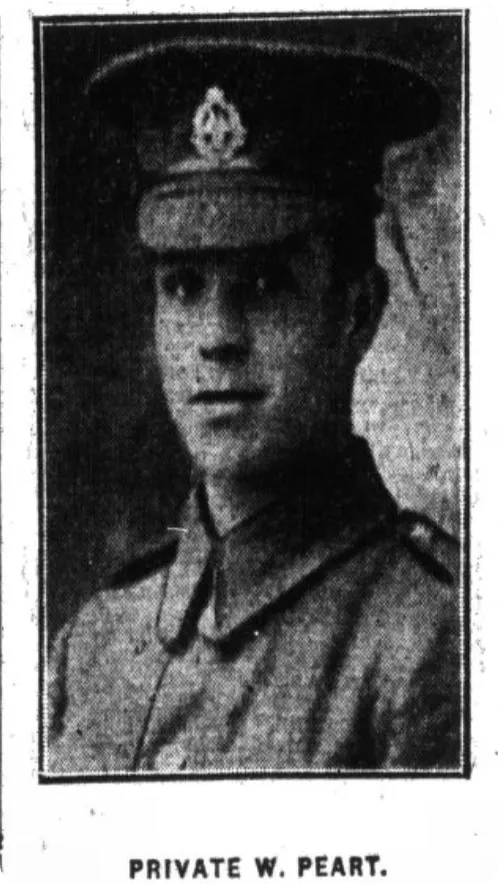
After being wounded on the first day of the Battle of the Somme, Private Peart's photograph appeared alongside his testimony in the Burnley Express, 22 July 1916.
He went on to say:
"We got over the second time, our lads getting bowled over all around us as we were being shelled heavily, and machine guns were in full swing. One of our lads had his legs blown off. I got hit from the flank of the machine guns, and was thrown forward on my face. I managed to crawl to a shell hole, where I lay for 14 and a half hours. I continued firing with my left hand, until my rifle was blown away. My pack was blown clean off my back also. I was only eight yards from the Germans, where I noticed that the German gunners were in their shirt sleeves, chained to the guns. It was hell upon earth. Captain Riley died like a hero."
'Hell upon earth' is how Private Peart described the scene. This is what our First World War ancestors experienced.
Wounded First World War soldiers
Thousands of British soldiers were wounded during the First World War. Sapper George Daintith was among them, hit with an explosive bullet through his right thigh and another in his right calf after getting stuck in some barbed wire. After waiting for two days in a clearing station for the hospital train, he was taken by a motor ambulance to the train, and then to a hospital at Le Trepporte. He stayed there for three days before being taken to Dieppe and later by hospital ship to England.
"I shouted for assistance, but I could not be heard for the noise of the bullets... I had a temporary bandage put on my leg, and then I had an awful journey, being carried back on a stretcher along the communication trench. I was glad when I arrived at the first dressing station and got my wounds dressed."
Another wounded soldier was 21-year-old Private Thomas W Whalley of the South Lancashire Regiment. On 14 April 1918, Thomas was repairing telephone wires with his comrade Signaller Harold Vose. Harold didn't make it, and Thomas was wounded in both of his legs and his neck.
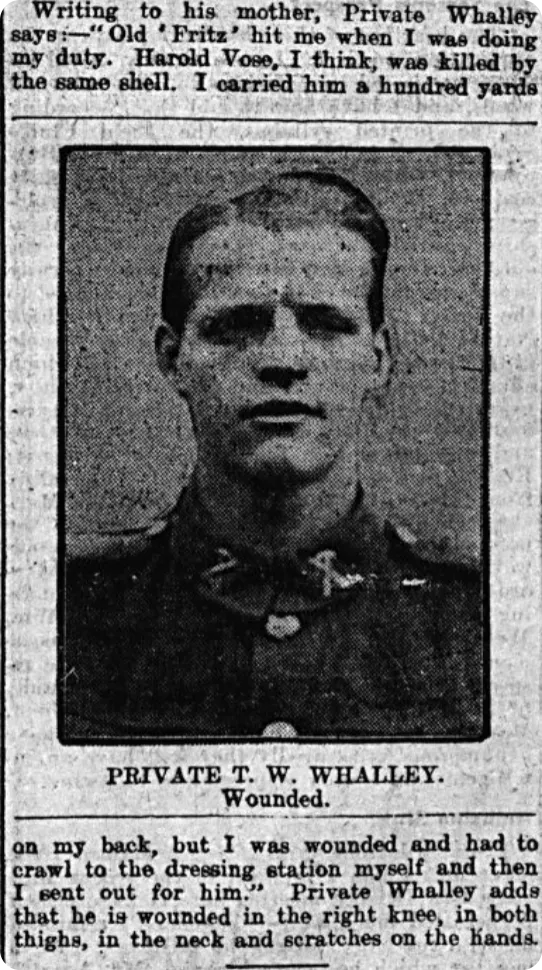
A photograph of Thomas appeared in the Runcorn Examiner, 11 May 1918.
Thomas later convalesced in a hospital in Wiltshire.
A 'land fit for heroes'?: life after the First World War
Soldiers who survived the horrors of warfare came home to a changed world, with women newly engaged in the workforce and loved ones separated for years on end. Those who were injured or disabled faced an uncertain future. How would they work? Although many could rely on small pensions, others had their claims rejected.
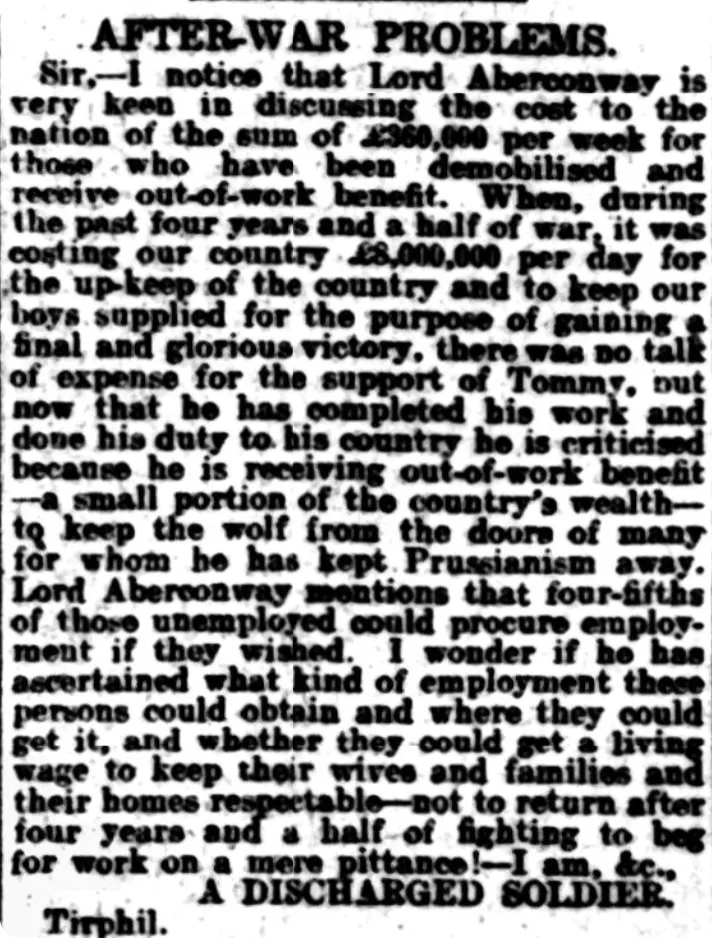
A discharged soldier's view on the post-war world, from the Western Mail, 14 January 1919.
And then there was the issue of ex-soldiers who were now unemployed after serving their country for four years, risking their lives. Prime Minister David Lloyd George promised a 'land fit for heroes', but as we can see from notes left on the 1921 Census, many felt cast off.
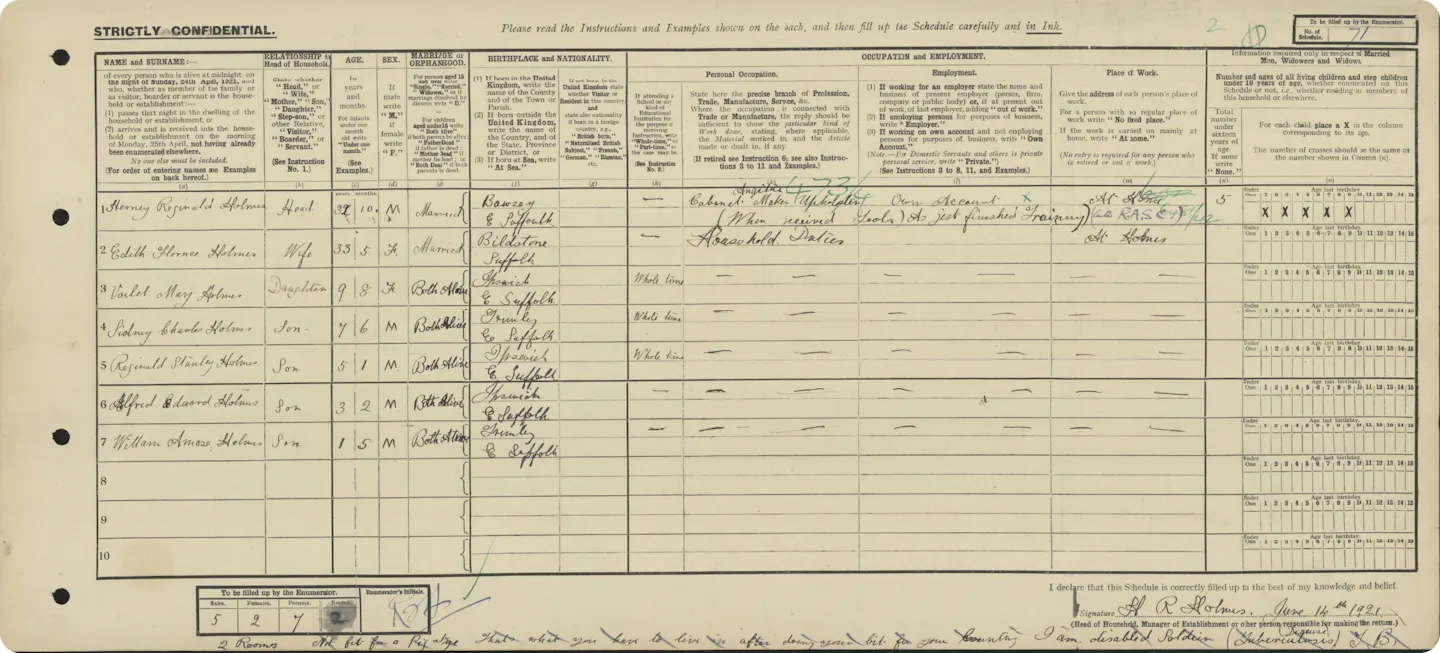
Henry Holmes commented 'not fit for a pig sty. That's what you have to live in after doing your bit for your country. I am a disabled soldier.' View the full record here.
How do you think your ancestor would have felt, coming home to a changed, uncertain world after four years at war?
Understand your family's connection to the First World War
Whether your First World War ancestor made it home, was changed by a life-altering injury or tragically died in uniform, understanding his experiences helps you better understand him.
You can find service records, campaign medal rolls, casualty lists, gallantry awards, pension records and more on Findmypast - try searching a name within our military records, and honing your research skills with Guides. For a vivid glimpse into daily life during wartime, you can also explore war diaries from the First World War via The National Archives.
How to find someone who fought in WW1: from service records to campaign medal rolls
Findmypast's British Army Service Records collection is a great starting point. You can search millions of records with just a name, and learn your ancestor's regiment, service number and more.
Then, delve deeper by exploring rolls of honour, campaign medals, medical records, specific regiment records, and the Commonwealth War Graves Debt of Honour.