The Dardanelles Campaign: a dangerous Royal Navy gamble, as told through newspapers
6-7 minute read
By Daisy Goddard | June 1, 2026
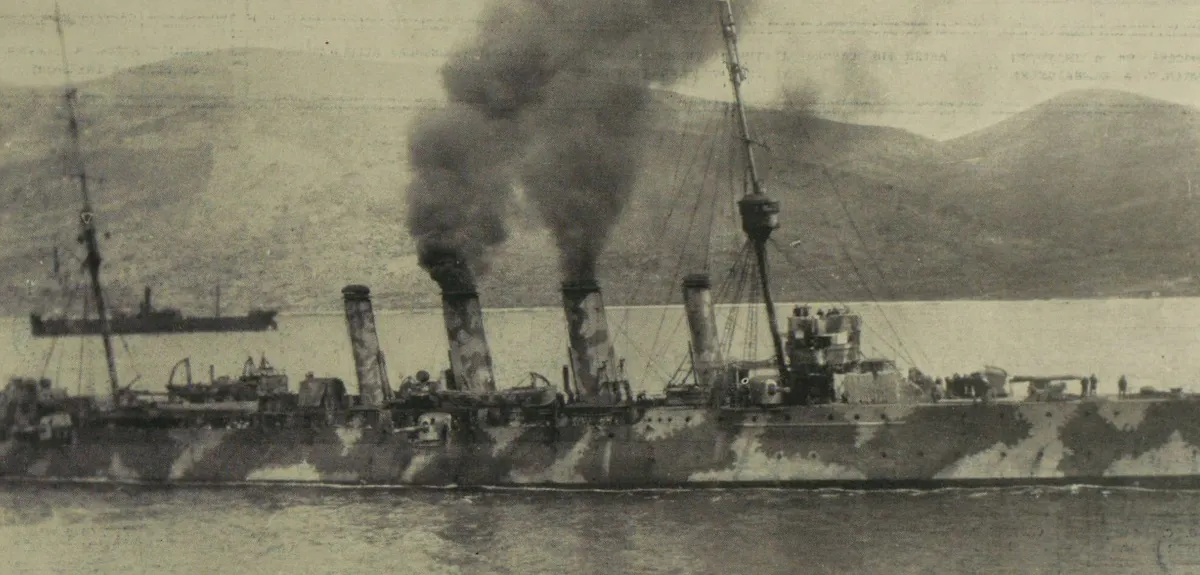
Rampant disease. Choppy oceans. Brutal trench warfare. For families across Britain, the Dardanelles Campaign would mean fathers, sons, and brothers who would never return home.
In the spring of 1915, British newspaper readers followed reports from a distant stretch of water with growing hope, confusion, and dread. The Dardanelles - a narrow strait connecting the Mediterranean to the Sea of Marmara – suddenly dominated front pages. Journalists described thunderous naval bombardments, burning warships, and the possibility of a breakthrough that might change the course of the First World War.
For many families, these newspaper reports were the first clues that sons, husbands, and brothers serving with the Royal Navy had entered one of the war's most dangerous campaigns. As reflected by historical records and contemporary newspaper accounts, the story of the Gallipoli campaign started at sea.
Why did the Dardanelles matter?
By early 1915, the First World War had settled into a brutal stalemate on the Western Front. Allied leaders searched for another way to weaken Germany and its allies. Following the Ottoman entry into the war on the side of Germany in late 1914, the strategically vital Dardanelles Strait became a major focus for the British Admiralty.
The waterway, controlled by Turkey and protected by formidable Dardanelles defences, offered access to Constantinople and a route towards Russia, Britain's ally in the east.
At the centre of the plan was Winston Churchill, then First Lord of the Admiralty, who strongly supported a naval assault on the strait. British military planners believed that if the Royal Navy could force its way through the Dardanelles, the Ottoman Empire might collapse - the balance of the war could shift dramatically.
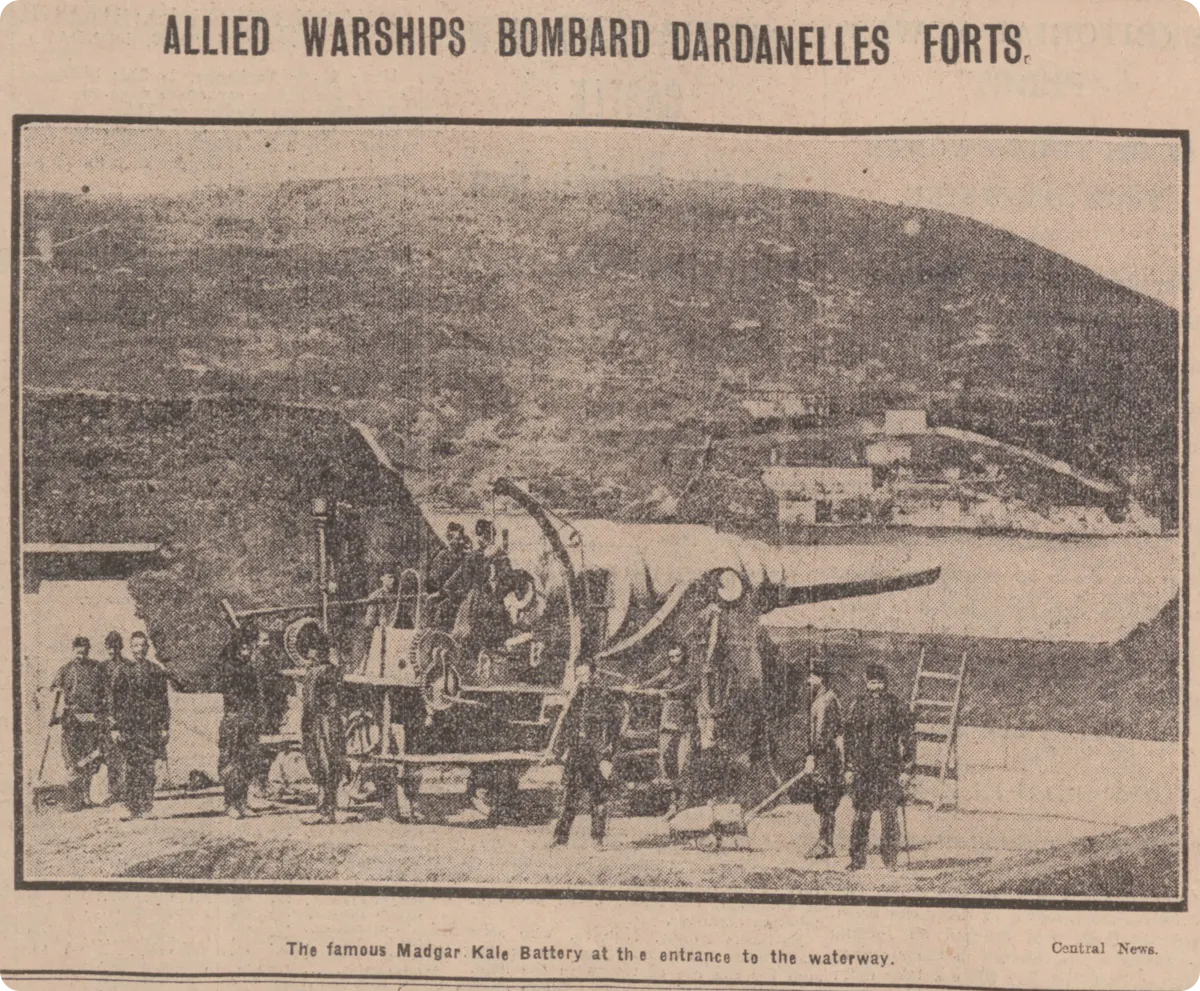
On paper, the strategy appeared bold but achievable. In reality, the Dardanelles were heavily defended.
The Royal Navy enters the strait
In February 1915, British and French warships began bombarding Ottoman forts guarding the entrance to the Dardanelles. Newspaper coverage presented the operation with cautious optimism. Reports described Allied ships advancing steadily while emphasising the fleet's immense firepower.
For readers at home, these early articles created the impression that victory might come quickly.
But the geography of the Dardanelles favoured the defenders. The strait was narrow, twisting, and heavily mined. Ottoman artillery batteries lined the shores, hidden among cliffs and hillsides. Even the world's most powerful navy struggled to operate effectively in such confined waters.
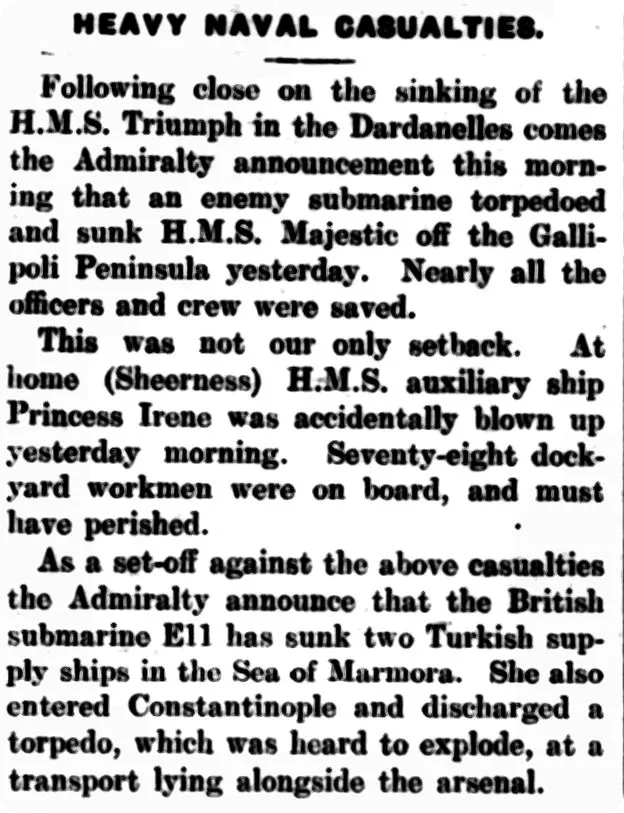
The sailors aboard these ships endured constant danger. Historical newspapers from the time captured the uncertainty of the campaign - reports of shellfire, damaged vessels, and mounting casualties filtering back to Britain in fragments.
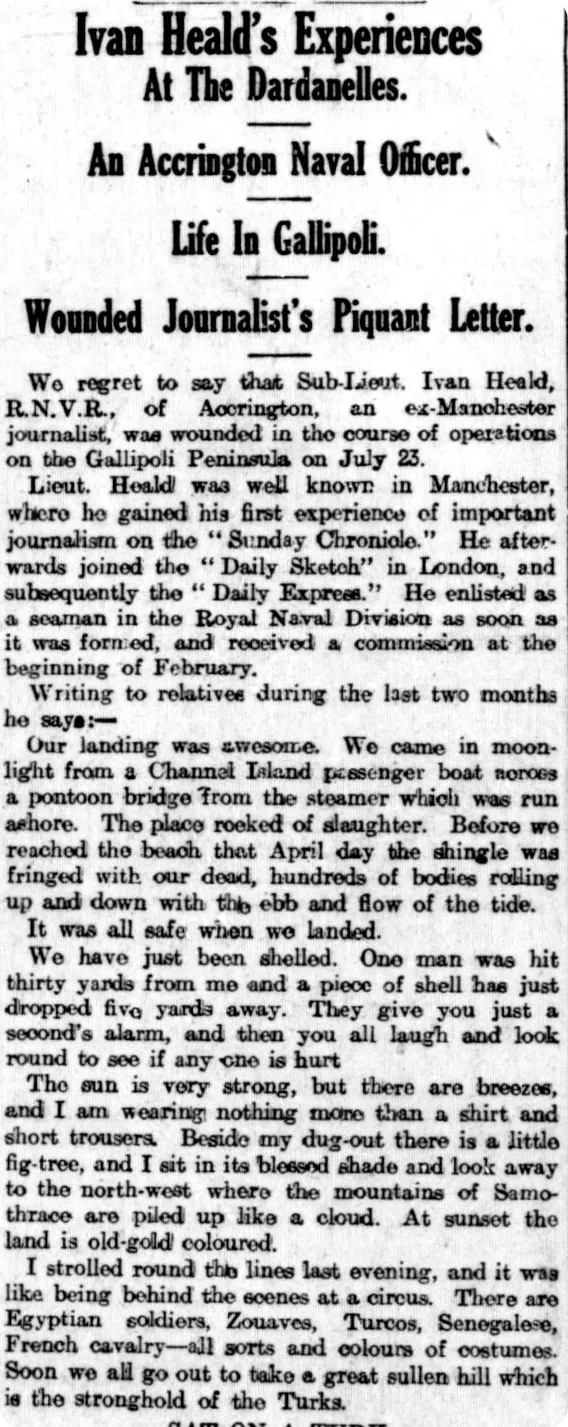
For families reading the daily papers, every update carried emotional weight.
The disaster of 18 March 1915
The defining moment of the naval campaign came on 18 March 1915. That morning, Allied battleships launched a major assault intended to finally break through the Ottoman defences. Instead, disaster unfolded.
As the fleet pushed deeper into the strait, several ships struck mines laid secretly by the Ottoman minelayer Nusret. The French battleship Bouvet sank rapidly with enormous loss of life. British ships, including HMS Irresistible and HMS Ocean, were also lost.
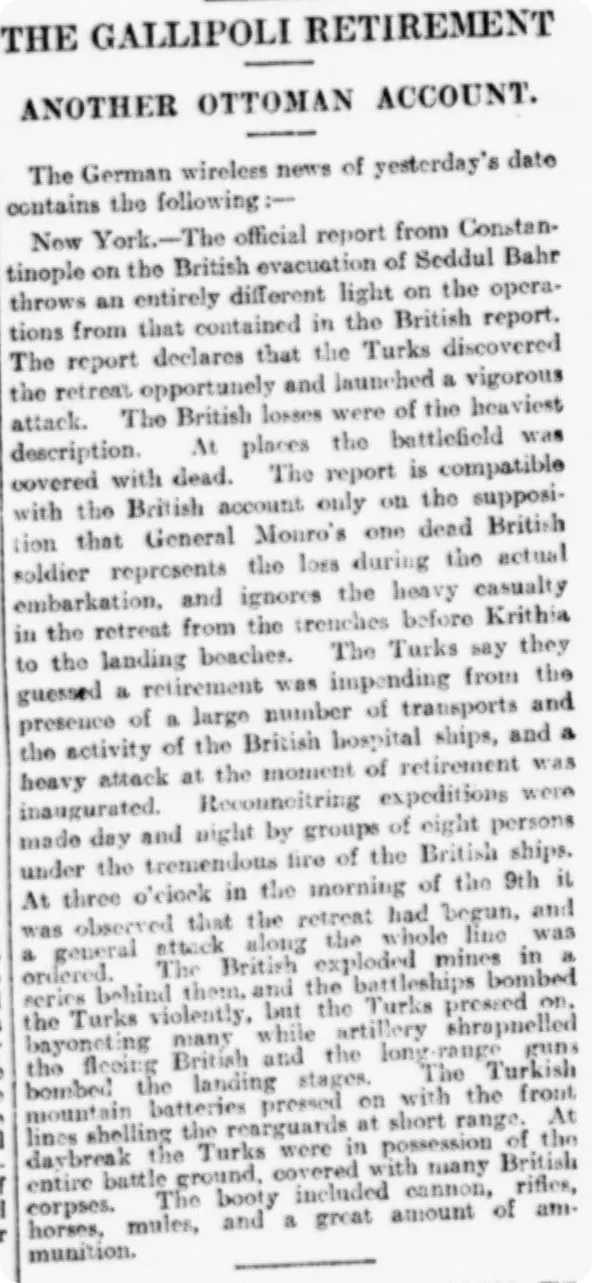
Newspapers struggled to balance patriotism with the grim reality of defeat. Reports praised bravery and endurance while carefully revealing the scale of destruction. Readers learned of ships disappearing beneath the water, sailors thrown into the sea and rescue attempts carried out under relentless fire.
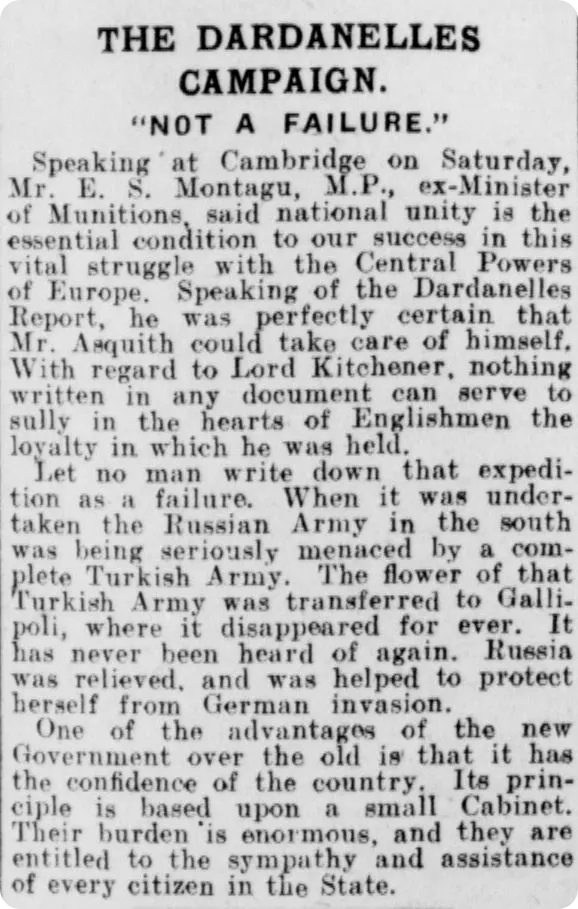
The loss shocked the British public. The Royal Navy had long been viewed as almost invincible. Now, in the Dardanelles, modern naval power had met the deadly combination of mines, coastal guns, and difficult terrain. For naval families, the headlines were painfully personal.
From naval assault to the Gallipoli landings
After the failed naval breakthrough, Allied leaders changed their strategy. If the guns along the shoreline could not be destroyed from the sea, troops would land and seize them directly.
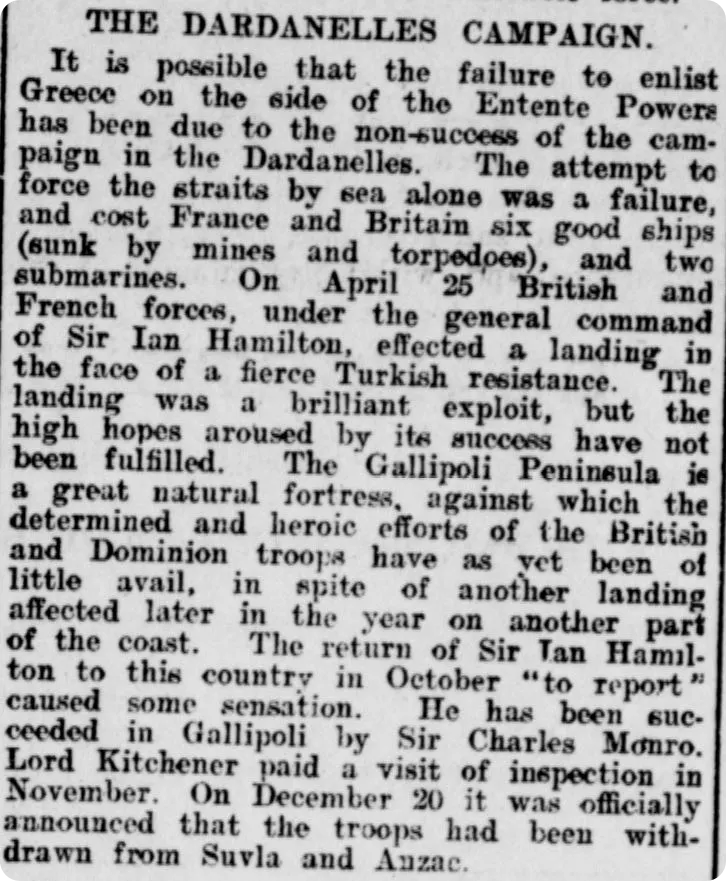
North Star and Farmers’ Chronicle, 6 January 1916.
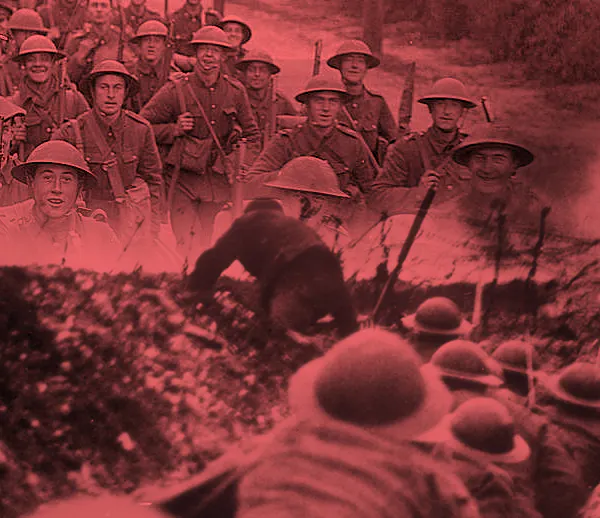
In April 1915, Allied troops from Britain, Ireland, Australia, New Zealand, India and France landed on the Gallipoli peninsula as part of a major expeditionary force intended to overwhelm Ottoman positions. The Royal Navy remained deeply involved throughout the operation, transporting troops, providing artillery support and evacuating wounded men under fire.
Many sailors who had survived the March naval attacks continued serving during the land campaign that followed.
Newspapers increasingly carried stories of courage alongside growing signs that the campaign was not progressing as hoped. Casualty lists lengthened. Reports from correspondents described impossible conditions – steep cliffs, heat, disease, and constant shellfire as Allied troops fought desperately against entrenched Turks defending the peninsula.
For people tracing military ancestors today, newspapers from this period offer remarkable insight into how the Dardanelles operation was experienced in real time. Local papers often mentioned individual sailors and soldiers by name, published letters home and reported injuries or deaths before official records fully reached families.
Life aboard Royal Navy ships
The Dardanelles Campaign reminds us that naval warfare in the First World War was not fought only in famous sea battles like Jutland.
Sailors in the eastern Mediterranean faced exhausting and terrifying conditions. Battleships became floating targets in confined waters. Crews worked amid choking smoke, deafening gunfire, and the constant threat of mines beneath the surface.
Many younger sailors had joined the Royal Navy only shortly before the war began. Some had never experienced combat before arriving in the Dardanelles.
Newspaper illustrations and reports helped readers visualise these scenes. Images of towering battleships, shattered vessels, and crowded decks brought the distant campaign into British homes. Yet behind every dramatic headline stood ordinary men trying to survive.
For family historians, naval service records, medal rolls, and casualty lists can help piece together these experiences. Newspapers often add the emotional detail missing from official documents, revealing how communities responded to losses and celebrated acts of bravery.
Why the Gallipoli campaign failed
The campaign failed for several reasons.
Allied leaders underestimated Ottoman resistance and overestimated what naval power alone could achieve. Minefields proved devastatingly effective, while difficult terrain made coordination between land and sea operations extremely challenging.
The campaign became a symbol of military miscalculation and human cost. But the Ottoman victory also revealed the Allies' extraordinary endurance.
How many casualties were there in the Dardanelles Campaign?
The Dardanelles Campaign resulted in enormous casualties on all sides. Between the failed naval assault and the Gallipoli land campaign that followed, the Allies suffered more than 250,000 casualties, including those killed, wounded, missing, or who fell ill.
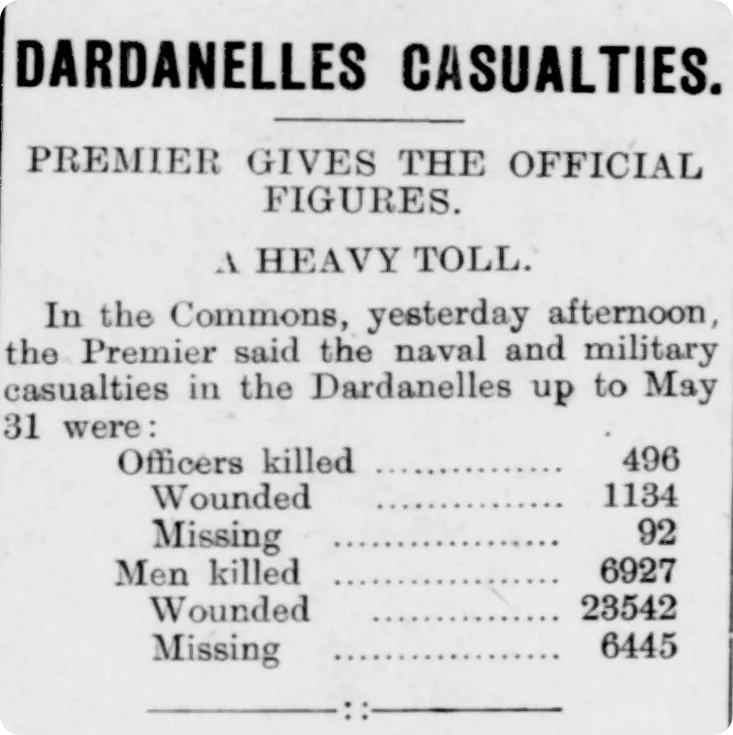
Ottoman forces endured similarly devastating losses, with estimates also exceeding 250,000. Beyond the staggering numbers were countless individual stories of grief and survival, many of which survive today in military records, local newspapers and family histories.
Remembering the Dardanelles today
More than a century later, the Dardanelles Campaign still echoes through family histories.
Perhaps your ancestor served aboard HMS Ocean. Perhaps they appeared in a local newspaper casualty list or wrote letters describing life in the Mediterranean. Even families without direct military connections might discover how deeply the campaign shaped local communities through memorials, newspaper reports, and stories passed down through the generations.
Historical newspapers are one of the most powerful ways to explore these experiences. They preserve not only the facts of the campaign, but the emotions surrounding it – hope, fear, grief, and uncertainty unfolding day by day.
The Dardanelles Campaign began with the belief that naval strength could change the course of the war. Instead, it became one of the First World War's most sobering lessons about the limits of modern warfare and the human cost carried by ordinary families far from the battlefield.