The brave teenage codebreaker who helped pave the way for VE Day
6-7 minute read
By Ellie Ayton | May 6, 2025
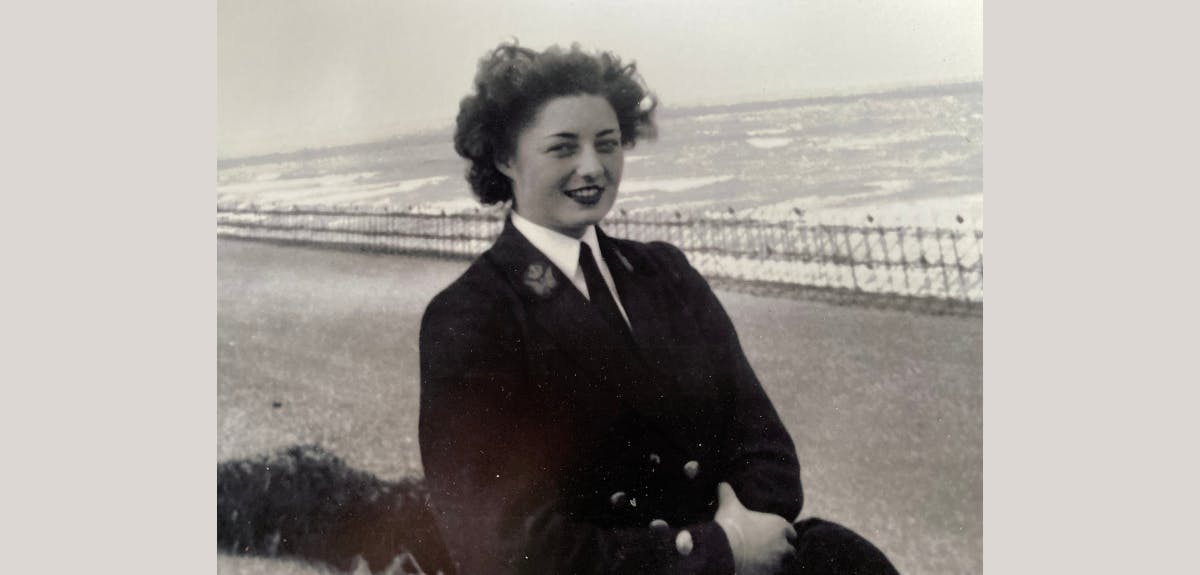
Still a teenager, Pat Owtram had no idea that learning German from her family’s cook would lead to her signing the Official Secrets Act. After three years, her work helped to bring about VE Day: the end of the Second World War in Europe. This is her incredible story.
In September 1939, Britain braced itself for war.
Civilians faced blackouts, rationing, and loss, but a strong spirit of resilience began to emerge. While men went to war, women stepped into vital roles, united in a national fight for freedom and survival.
Ethel Patricia Owtram was just a teenager when she stepped into one of the Second World War’s most secretive roles. From 1942, she served as a special duties linguist in the Women's Royal Naval Service (WRENS), intercepting German radio transmissions, often encrypted, crackling across the airwaves.

Pat pictured in 1943.
She would transcribe and translate these messages, passing them to Bletchley Park, where they became vital pieces in the Allied intelligence puzzle.
Incredibly, Pat’s younger sister Jean joined the First Aid Nursing Yeomanry, working in the Special Operations Executive. She contributed to the SOE’s resistance network behind enemy lines, decoding messages received from agents in the field.
Search for stories in our newspapers and publications
Explore millions of digitised pages of newspapers and other publications from our British and Irish collections, dating as far back as the 1700s.
And while Pat and Jean, the ‘Codebreaking Sisters’ as they were later referred to, worked behind the scenes, their father was on active service and their mother was an ARP warden.

Pat’s story, and that of her family’s, is one of service and dedication at one of Britain’s most uncertain times.
Who was codebreaker Pat Owtram?
Patricia was the daughter of Henry Cary Owtram, a cotton mill owner, and Dorothy Daniel. She had two siblings, Jean and Robert. The family lived in Lancashire.

Pat pictured in her WRENS uniform.
Her grandfather, Herbert Owtram, and mother Dorothy appear in Lancashire in the 1939 Register, taken barely weeks after war became a reality once more. If you look at the last person in the household, you’ll see Cecilia Getzl: she was the Austrian Jewish refugee and the Owtrams’ cook who taught Patricia German.
Without Cecilia, Patricia might have never signed the Official Secrets Act and become a codebreaker.

The woman who taught Patricia German. You can view the full record here.
Patricia, on the other hand, was away at school in Warwickshire in 1939, a reminder that she was still very young as war broke out.
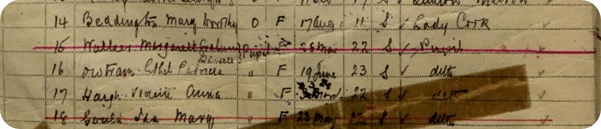
Patricia’s 1939 Register record. You can see the full record here.
Sadness would soon hit the Owtram family. Patricia and Jean’s father, Henry Cary Owtram, was taken as a Prisoner of War in Japan in 1942 after the Battle of Singapore.
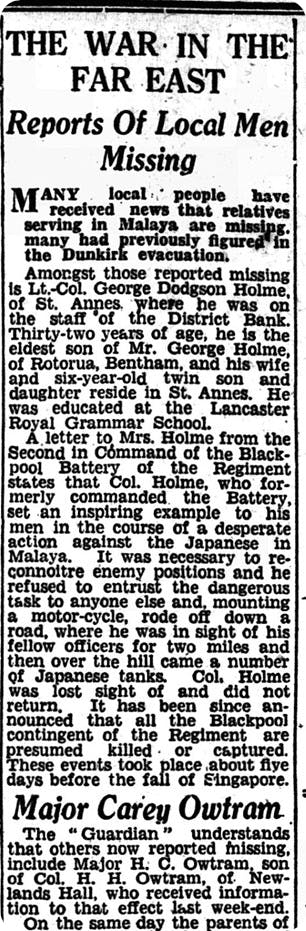
News of Cary’s capture makes the Lancaster Guardian, 20 March 1942.
Cary’s status as a POW in the Far East is recorded in our Prisoner of War collection. He wouldn’t make it home until after VJ Day and the end of the war – this must have weighed on Pat and her family heavily, and perhaps even inspired her to make a difference in the war effort.
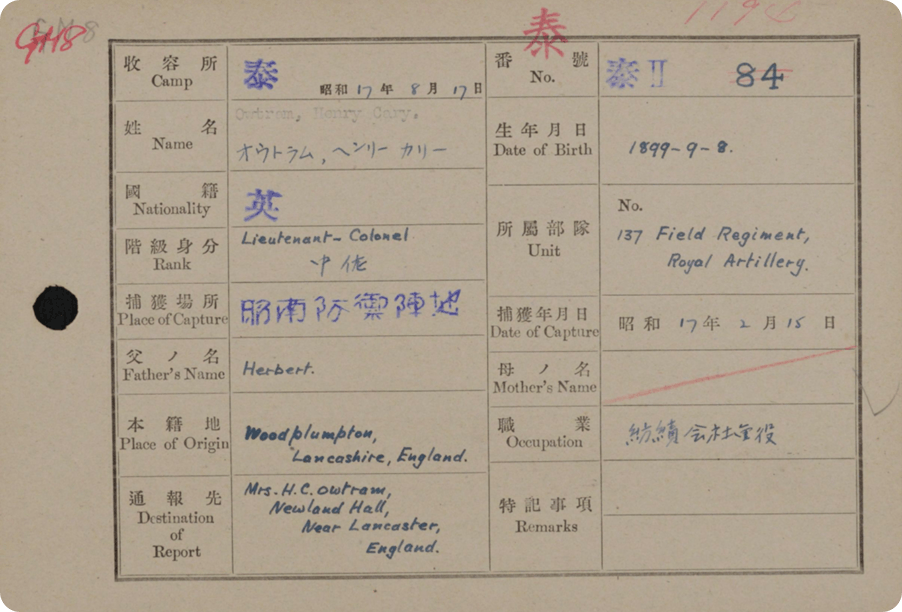
Cary’s Prisoner of War record.
As a young man, Cary also served in the First World War on a temporary commission in the Royal Navy.
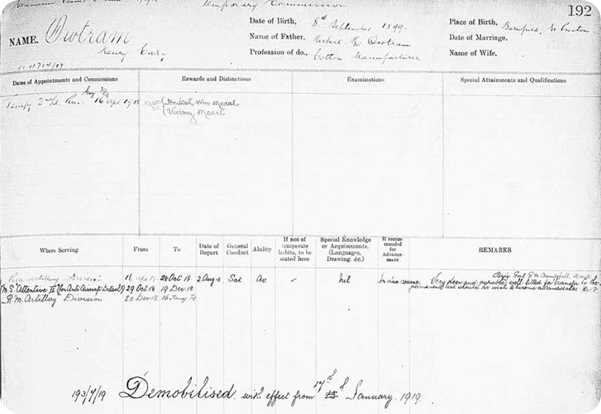
Cary’s Royal Navy record from the First World War.
It was around this time that Pat joined the WRENS – she was just 18 years old.
Codebreaking and Bletchley Park
In a moment that would define her life, Pat signed the Official Secrets Act in Liverpool’s Royal Liver Building in 1942.
Her fluent German led to a secret role intercepting enemy radio messages at coastal listening posts known as Y stations. After completing specialist training, she was posted to sites in Yorkshire, Lyme Regis, and Dover, where she worked as a Chief Petty Officer.

Photographs of Pat from 1944-1945 during her time with the WRENS.
There, she and other WRENS transcribed German naval signals: vital intelligence later used by Bletchley Park to bring the war to a swifter end.
Pat turned 21 just two weeks after the events of the D-Day Landings in June 1944.
VE Day: the end of the Second World War in Europe
Pat has described her memories of VE Day, tinged with sadness as her father was still a captive:
"It came as a huge relief. I remember the cheers and tremendous excitement of the crowds as I joined them outside Buckingham Palace. Six long years of war in Europe were over. I felt I'd played my part in the WRENS and looked forward to my father returning home."
She also said it was vital to share stories and photographs of this time – precious moments of our shared history that need preserving for years to come.
"Keeping these memories alive is so important – and having access to wartime records really matters. They help us remember, understand, and pass these powerful stories on for future generations"
Thankfully, Cary’s family received news he was safe in 1945 – he’d taken charge of the 137th Blackpool Regiment in Malaya after the death of Colonel Holmes, and after capture was a prisoner in Thailand No.2 camp.
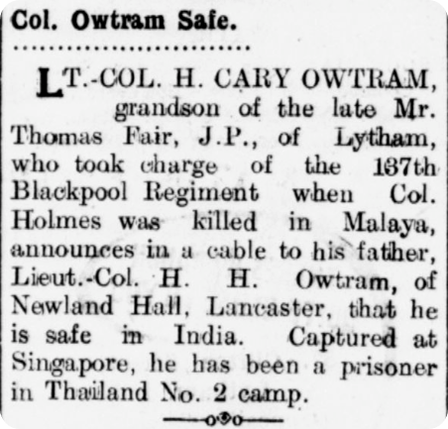
Pat’s father is safe, from the Lytham Times, 14 September 1945.
After the war, Pat worked under General Eisenhower researching German documents for potential war criminals, and was offered a job as a translator at the Nuremberg trials, turning it down to spend time with her recently-returned father.

A family reunion: Pat’s father makes it home.
Later, she continued her studies at St Andrews University and Somerville College, Oxford, and even spent some time as an assistant archivist at the British Embassy in Oslo.
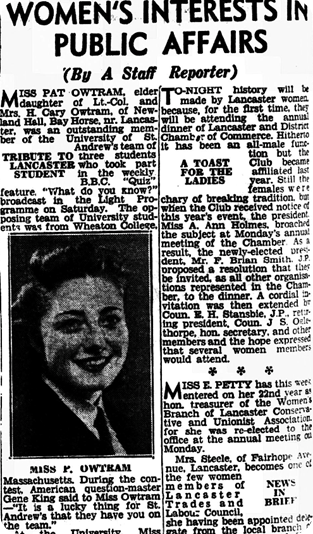
Pat was an ‘outstanding’ member of the University of St Andrews team on the BBC’s What Do You Know?, pictured in the Lancaster Guardian, 9 March 1951.
She was awarded a fellowship at Harvard University, which she set sail for in 1953 aboard the Cunard liner Queen Mary.
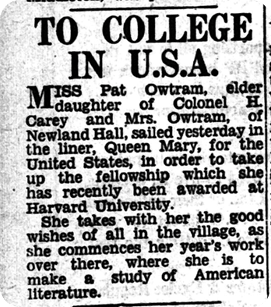
Pat heads to the USA, in the Lancaster Guardian, 4 September 1953.
Aged 30, she left Southampton on 2 September and arrived later in New York.
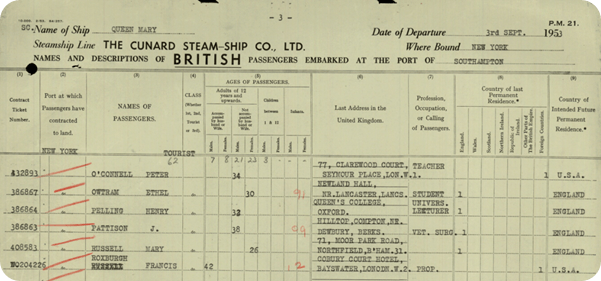
Pat, listed as her first name of Ethel, on the Queen Mary’s passenger list in 1953. You can view the full record here.
She worked as a journalist and later as a television producer for Granada television, becoming involved in what would become Coronation Street, University Challenge and The Sky at Night.
Pat later married William Ray Davies in 1968.

Pat’s marriage was announced in the Lancaster Guardian, 14 June 1968.
Pat’s story, and that of her sister Jean and father Cary, should be remembered, shared and preserved. Thanks to their efforts, and those of many others, Victory in Europe Day became a reality. Six long years of war came to an end. And we can now celebrate VE Day decades later.
How did your town celebrate Victory in Europe? Delve into our vast newspaper archive to really understand life in wartime Britain.