When did women get the right to vote in the UK?
Jump to
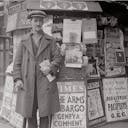
Women got the vote in stages. Some women first gained the right to vote in 1918, but it wasn't until 1928 that women and men received equal voting rights in parliamentary elections.
Key Insights
Women over the age of 30 who met certain property qualifications first gained the vote under the Representation of the People Act 1918.
Equal voting rights were introduced in 1928, allowing women to vote on the same terms as men from the age of 21.
Census records, newspapers and electoral registers can help you uncover the lives of ancestors involved in the campaign for women's suffrage.
Jump to
Voting rights in Victorian Britain
Throughout much of the 19th century, the right to vote in Britain was limited by both property ownership and gender. Parliamentary elections for the House of Commons were dominated by men who met strict property qualifications, while women were excluded from voting altogether.
Political reform gradually expanded the electorate during the Victorian era, but these changes benefited men rather than women. As more men secured the vote through successive Reform Acts, campaigners increasingly questioned why women continued to be denied the same rights.
For many women, this was about far more than casting a ballot. Without representation in Parliament, they had little influence over laws affecting education, employment, property and family life.
The birth of the women's suffrage movement
By the late nineteenth century, organised campaigns for female suffrage had gathered momentum. Across Britain, suffrage societies petitioned Parliament, held public meetings and campaigned peacefully for reform.
In 1903, the Women's Social and Political Union (WSPU) was founded by Emmeline Pankhurst and her daughters. Frustrated by decades of limited progress, the WSPU adopted the slogan 'Deeds, not words' and became known for direct action.
Militant versus parliamentary methods
Many suffrage societies continued to campaign through peaceful lobbying, while the suffragettes attracted widespread public attention through protests, demonstrations and civil disobedience. Together, these suffrage campaigners kept the issue firmly in the national spotlight.
The impact of the First World War on women's suffrage
The outbreak of the First World War in 1914 changed the course of the movement.
Many militant suffragettes suspended their campaigns and supported the national war effort. Across Britain, women stepped into roles previously dominated by men, working in factories, transport, agriculture, hospitals and government offices while millions of men served overseas.
These contributions demonstrated women's vital role in British society and helped shift public and political attitudes. Although historians continue to debate the exact extent of the war's influence, it undoubtedly formed part of the wider context in which voting reform became possible.
For family historians, this period offers compelling stories to uncover. Newspaper reports, employment records and military collections can reveal how female ancestors supported their families and communities during one of Britain's greatest national crises.
The 1918 Representation of the People Act gives some women the right to vote
The turning point came with the Representation of the People Act 1918.
The Act dramatically expanded the electorate by granting voting rights to almost all men aged 21 and over, regardless of property ownership. It also gave some women the vote for the first time.
Only women over 30 or who met certain property qualifications, or were married to someone who did, could vote in parliamentary elections. Around 8.5 million women joined the electorate, but millions of younger women remained excluded.
Equal suffrage introduced in 1928
A decade later, Parliament passed the Representation of the People (Equal Franchise) Act 1928.
The legislation granted electoral gender equality by lowering the voting age for women from 30 to 21 and removing the remaining property restrictions. With the Equal Franchise Act, around five million additional women entered the electorate overnight.
When did the women in my family tree get the right to vote?
If your ancestor was over 30 and met the property qualifications, she may have become eligible to vote in 1918. If she was younger, she may have had to wait until 1928, when women gained the vote on the same terms as men.
More than a century later, the struggle for women's suffrage continues to resonate through family history. Electoral registers can reveal when female ancestors first appeared as voters, while census records, newspapers and local archives help you delve deeper into their experiences.
About the author

Researcher
Published on Tue, 7 July 2026.
Share this article
Find your family in billions of online records
Search billions of family history records for free
Discover original records and transcripts of your ancestors’ documents
Delve into the details their lives, from key dates to addresses, occupations and more
Who are you looking for?