When was the Battle of Cable Street?
Jump to
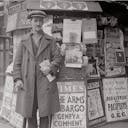
The Battle of Cable Street took place on 4 October 1936 in East London, when local people gathered to prevent the British Union of Fascists (BUF) from marching through their neighbourhood.
Key Insights
- The Battle of Cable Street took place on Sunday 4 October 1936 in Stepney in the East End.
- Around 20,000 anti-fascist protesters gathered to oppose a march organised by Oswald Mosley and the British Union of Fascists.
- Newspapers, court records and eyewitness testimonies can reveal how the Battle of Cable Street was experienced by those who were there.
Jump to
What was the Battle of Cable Street?
The Battle of Cable Street was a confrontation between anti-fascist protesters and police attempting to clear a route for the British Union of Fascists.
Led by Oswald Mosley, fascist organisers and supporters planned to march through East London, an area with a large Jewish population.
When the march went ahead despite attempts to block it via petitions and newspaper campaigns, thousands of locals gathered to show their opposition.
Barricades were erected along Cable Street, and clashes broke out as police attempted to allow the march to continue. Eventually, the authorities abandoned the planned route and the fascists were prevented from marching through Cable Street.
Who participated in the Battle of Cable Street?
The anti-fascist resistance brought together people from different backgrounds and political groups. These included:
- Jewish organisations like the Jewish People’s Council Against Fascism and Anti-Semitism
- The Communist Party of Great Britain
- The Independent Labour Party
- Trade unions and local activists
A true community event, local residents played a significant role, with women, men and young people among those who took part.
On the other side were Mosley's British Union of Fascists, known as the Blackshirts. Around 3,000 BUF supporters turned out to march through the East End.
Around 6,000-7,000 Metropolitan police officers were deployed to clear the march’s route.
When was the Battle of Cable Street?
The Battle of Cable Street took place on 4 October 1936. The confrontation lasted for several hours as protesters attempted to prevent the fascist march from passing through the area.
The event generated a substantial paper trail. From local publications to national titles, historical newspapers can reveal contemporary reports of the confrontation. Court and arrest records also provide valuable evidence of people caught up in the disorder.
The legacy of Cable Street today
The Battle of Cable Street became an enduring symbol of resistance to fascism and of the power of communities standing together.
Its legacy can still be seen in East London, while the stories preserved in historical records offer a more personal perspective. Behind the familiar headlines were people going to work, raising families and navigating everyday life - while an extraordinary political confrontation unfolded around them.
For family historians, Cable Street is a reminder that major events don't only belong to history books - they can form an important part of our family story.
About the author

Researcher
Published on Tue, 15 September 2026.
Share this article
Search for stories in the newspaper archive
From big events to the ups and downs of day-to-day life, historical newspapers offer a fascinating insight into your ancestor's experience. Understand their world by delving into digitised newspapers today.