When was universal suffrage introduced in Britain?
Jump to
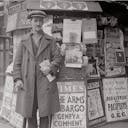
Universal suffrage was introduced in Britain in 1928, when women gained the right to vote on the same terms as men. It marked the culmination of over a century of reform, protest and campaigning that gradually extended the vote beyond a wealthy minority.
Key Insights
- Universal suffrage was achieved in 1928 with the Equal Franchise Act.
- For much of the 19th century, voting rights depended on property ownership, excluding most working-class people and all women.
- The electorate expanded gradually through reforms, protests and Acts of Parliament.
- Electoral registers, census records and newspapers can help identify when ancestors became eligible to vote.
Jump to
Universal suffrage meaning
Universal suffrage is the principle that every adult citizen has the right to vote, regardless of wealth, class or gender, subject to voting age and eligibility rules. It is the foundation of modern democratic systems.
Britain did not adopt it in one step. The electorate expanded across the 19th and early 20th centuries through successive reforms that widened participation in national elections and political life.
Voting rights in the 19th century: a system built for the rich
At the start of the 19th century, Britain’s electoral system was based on property ownership. Only men meeting specific property thresholds could vote. Most working-class men, and all women, were excluded.
The Reform Act 1832 was the first major change. It removed many “rotten boroughs” and extended voting rights to more middle-class men, but still excluded the majority of the population and formally defined voters as “male”, reinforcing women’s exclusion.
Further Reform Acts in 1867 and 1884 extended the vote to more working men, but property requirements still excluded many adults.
The campaign for universal suffrage
Long before universal suffrage, campaigners challenged this system.
In 1819, thousands gathered peacefully in Manchester to demand parliamentary reform. The meeting ended in the Peterloo Massacre, when cavalry charged into the crowd, killing at least 15 people and injuring hundreds more. The event became a powerful symbol of the demand for political change.
Two decades later, the Chartist movement became Britain's first nationwide working-class campaign for democratic reform. Between 1838 and 1848, Chartists presented huge petitions to Parliament calling for universal male suffrage, secret ballots and fairer parliamentary representation. Although their petitions were rejected, many of their demands were eventually enacted later.
Two decades later, the Chartist movement (1838–1848) became the first national working-class campaign for democratic reform, demanding universal male suffrage, secret ballots and fairer representation. While rejected at the time, many demands were later enacted.
By the late 19th century, attention increasingly turned to female suffrage. Peaceful suffrage societies campaigned through petitions, meetings and lobbying, while the Women's Social and Political Union (WSPU), founded by Emmeline Pankhurst in 1903, adopted more confrontational tactics. The militant suffragettes organised demonstrations, disrupted political meetings and carried out acts of civil disobedience to keep women's voting rights in the public eye.
Historical newspapers vividly document these suffrage campaigns, reporting everything from public rallies and political speeches to arrests, hunger strikes and debates in the House of Commons. Together, these records reveal how ordinary people helped reshape British democracy.
Voting rights are expanded
Universal suffrage was achieved through a series of landmark Acts of Parliament that gradually broadened the electorate.
The Reform Acts of 1832, 1867 and 1884 each increased the number of eligible voters, although voting rights still depended largely on property and residency qualifications. The introduction of the secret ballot through the Ballot Act 1872 transformed elections by allowing people to vote privately, reducing bribery and intimidation.
Following the First World War, the Representation of the People Act 1918 brought the largest expansion of voting rights in British history up to that point. It granted the vote to almost all men aged 21 and over, regardless of property, and to some women aged 30 or over who met minimum property qualifications. Around 8.4 million women entered the electorate for the first time.
A decade later, the Equal Franchise Act 1928 finally established equal voting rights by lowering the voting age for women to 21, matching that of men. Britain had, at last, introduced universal suffrage for parliamentary elections.
When did my ancestor get the right to vote?
This depends on their age, gender and social status. A property-owning man may have voted long before a labourer, while many women only gained the vote in 1918 or 1928.
Findmypast's digitised electoral registers are a key starting point for your research - they're particularly insightful when combined with census records and old newspapers.
Finding an ancestor in an electoral register is about more than discovering they could vote. Whether they were among the first working men to enter the electorate or among the millions of women finally granted equal voting rights, these records help you delve deeper into your ancestors' experiences and understand how class, gender and changing laws shaped their lives.
About the author

Researcher
Published on Tue, 7 July 2026.
Share this article
Find your family in billions of online records
Search billions of family history records for free
Discover original records and transcripts of your ancestors’ documents
Delve into the details their lives, from key dates to addresses, occupations and more
Who are you looking for?