Discover heroines in your family
The inspiring story of a brave Women’s Land Army heroine
4-5 minute read
By Ellie Ayton | January 22, 2025

Before this centenarian was a grandmother and great-grandmother, she was a Second World War home front heroine. This is her story.
In 2024, Mrs Peggy Banham celebrated her 100th birthday with a cake, songs, and birthday card from King Charles III. But there is so much more to the tale of this mother, grandmother, and great-grandmother. For this, we need to go back over 80 years and delve deeper into her family tree.
Amidst the uncertainty of the Second World War, a plucky eighteen-year-old woman decided to do her bit for her country by joining the Women’s Land Army.
What was the Women’s Land Army?
Long days, unfamiliar and back-breaking work, living away from home. These were just a few of the things that awaited those joining the ranks of the Women’s Land Army. These women first defied gender expectations during the First World War, but as war loomed once again, the Women’s Land Army was revived in 1939.
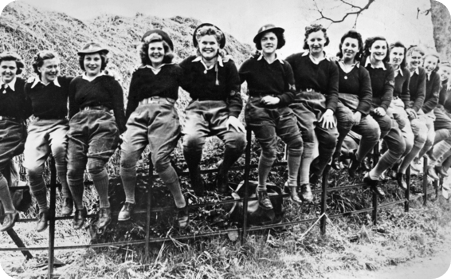
Happy Land Girls pose for a photo in 1943, from the Findmypast Photo Collection.
These vital wartime heroines ploughed fields, planted crops, and looked after livestock in all weathers while their fathers and brothers fought on the frontlines.
Find your family heroines
But alongside this, fierce friendships were born amidst the tough work. Land Girls like Peggy, and perhaps those in your own family, looked back on their time in the WLA with fondness and received praise and recognition for their dedicated work.
Who was Peggy Banham?
One of the best places to start when researching a WW2 ancestor is the 1939 Register. Taken on 29 September 1939, just as the Second World War crept over the horizon, the 1939 Register reveals where our ancestors were living and who they were living with, their occupation, date of birth, and if they had a civilian role.
Around 2,000 early Land Girls are on the Register too – we just need to add ‘Women’s Land Army’ into the Civilian Role search field to find them.
Peggy Harbour, as she was then called, lived with her family at Eva Moor in Rushden. Peggy’s father Bernard was a bespoke surgical boot maker. His wife Maisie and son Ronald were also working in the shoe industry, something which Peggy would soon follow their footsteps into.
Rushden is a town built on the shoemaking industry, so it’s perhaps no surprise this is how the Harbour family earned their living.

Peggy and her family in the 1939 Register. You can view the full record here.
It’s possible the family worked at the nearby boot and shoe factory in Rushden, near the cemetery on the map below.

In fact, if we hop back in time to the 1921 Census, we find Peggy’s father Bernard working for shoemakers Cave & Son – his father, brother-in-law and two siblings were also in the shoemaking trade.

Three years after she appeared on the 1939 Register, Peggy Evelyn Harbour joined the Women’s Land Army, one of some 200,000 young women who answered the call to serve on Britain’s home front. Aged just 18, she moved into a hostel to work on a farm in Orlingbury. The work would have been incredibly physical, a world away from what she was used to in the shoe industry.
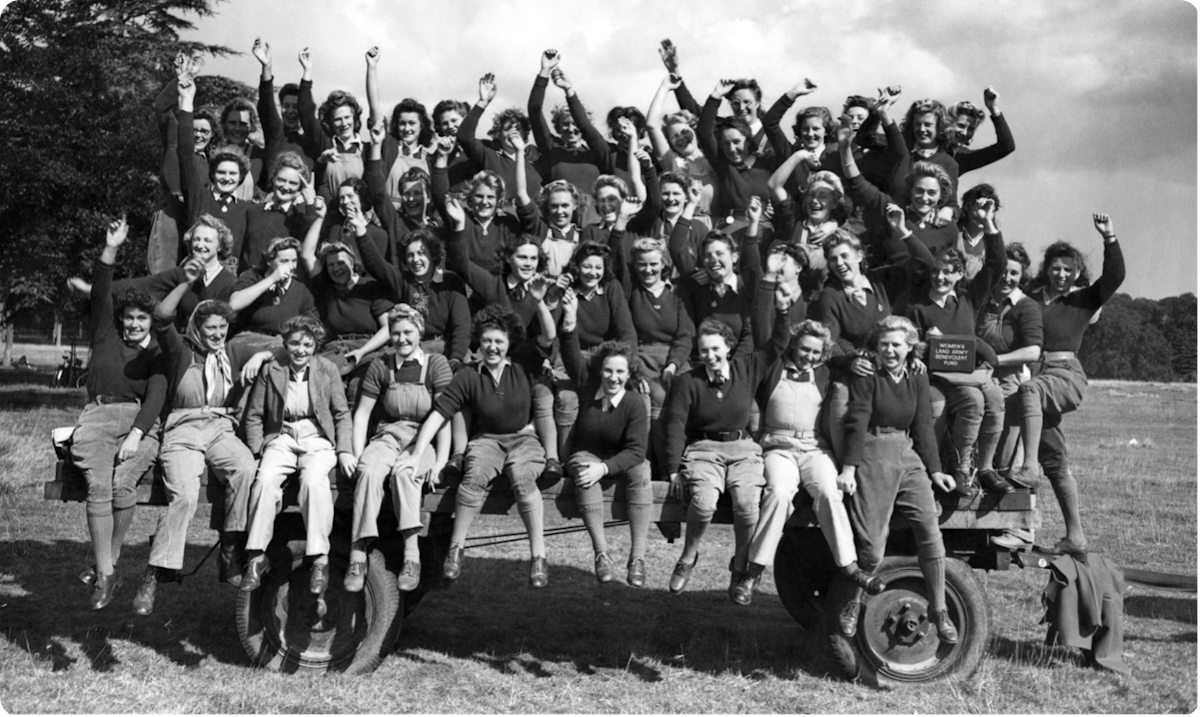
There are dozens of Women’s Land Army photos in our Photo Collection. Delve in here.
Peggy’s service record shows she was working as a shop assistant when she joined and that she resigned in late 1945 to get married.
During Peggy’s time in the Women’s Land Army uniform, she met her future husband, Geoff Banham. He was based at Chelveston Airfield – they met while walking down Rushden High Street. His military career took him to North Africa, their budding relationship continuing by letter.

Peggy’s WLA service card.
Incredibly, a photo of Peggy’s time in the Land Army survives in our newspaper archive. Printed in 1998, the Northamptonshire Evening Telegraph interviewed former Land Girls about their memories and experiences.

One of Peggy’s fellow Land Girls, Marjorie, said that working on a farm meant she could live at home rather than moving away with the WRNS. Marjorie recalled milking the cows from 7am before tending to the horses. Another Land Girl, Kathleen, planted trees which are still standing today.
Find your family heroes
Search Women’s Land Army records
There was a real drive in Peggy’s local Northamptonshire for Land Army recruits. Their vital work would keep Britain fed during six long years of war.

Peggy, Kathleen and Marjorie are just some of the incredible women who put their lives on hold to do their bit on the Home Front. They kept Britain strong and fed in a time of great uncertainty. We can’t thank these fierce wartime heroines enough for their dedication.
You can delver deeper into the women of the Land Army with the stories of Amelia King and Audrey Thompson, and explore more of their hard work and camaraderie with our blog.