The women of the Industrial Revolution forgotten by the history books
5-6 minute read
By Ellie Ayton | September 1, 2026
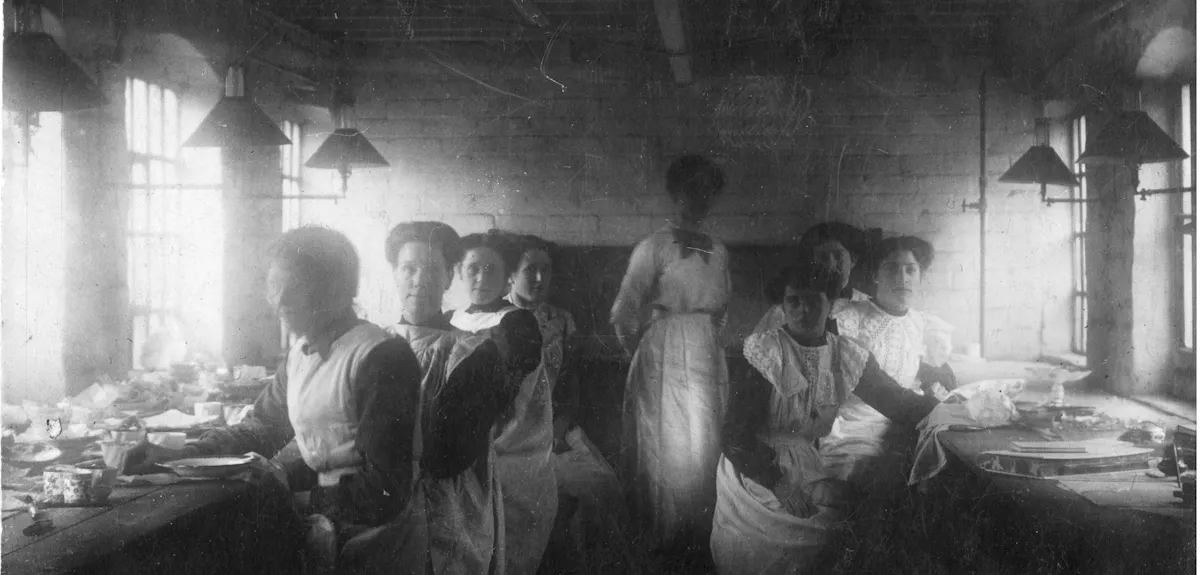
They painted china that travelled around the world. They spent decades mastering their craft. So why have you never heard of them?
When we picture the Industrial Revolution, we tend to imagine scorching blast furnaces, foundries worked by men, and the famous bridge stretching across Ironbridge Gorge.
And yet, across places like Coalport, Broseley, and Jackfield, women spent long days in factories, workshops and family businesses. They painted delicate china by hand, packed goods for transport, made pipes, raised families and helped keep household finances afloat. Their work shaped the communities around them, yet many have largely disappeared from popular histories of Britain's industrial past.
Keep reading to watch historian Alice Loxton discover more about the people who fired the Industrial Revolution.
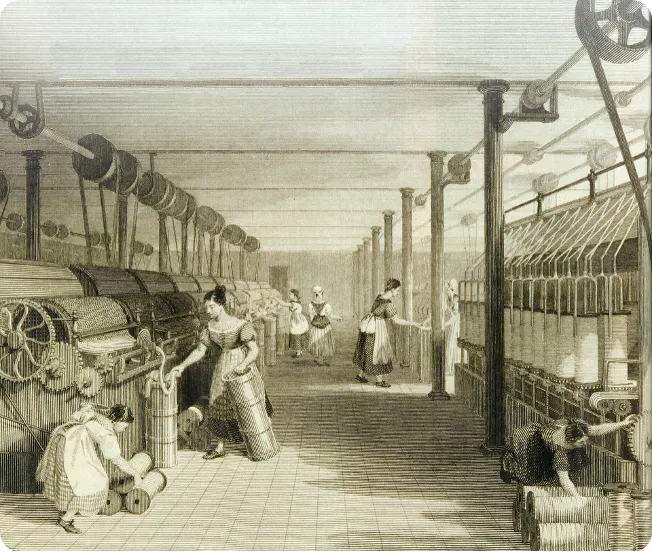
Engraving of a Manchester Cotton Mill around 1834. By Unknown author - Illustrerad vetenskap 10/2011, Public Domain, Wikimedia Commons, https://commons.wikimedia.org/w/index.php?curid=38301616
Many of these ordinary women left little trace beyond census entries and employment records. But when we piece these together, those records reveal a different history of industrial Britain: one centred on skill, family, and the work that carried communities through generations.
Why women often disappear from industrial history
Ironbridge is celebrated as the birthplace of the Industrial Revolution, but the story we usually hear is one of engineering breakthroughs and industrial innovation.
Less visible are the women who worked alongside those changes.
By the late nineteenth and early twentieth centuries, women formed an important part of the workforce in industries such as ceramics and pipe making. Yet while the names of factory owners survive, the skilled women who decorated china, earned wages, and helped support their households are often remembered only through a line or two in surviving records.
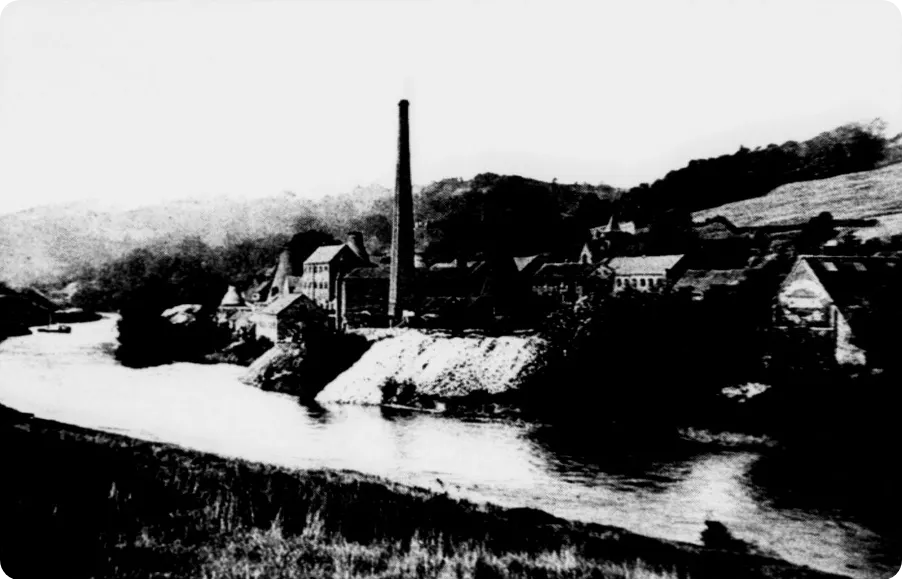
The Coalport China Works, pictured in Shropshire Star, 10 February 2001.
Imagine spending the day bent over fine porcelain, a paintbrush held steady between your fingers. One slip of the hand could spoil hours of work.
At Coalport China Works, skilled paintresses decorated plates, teacups, and serving dishes destined for homes across Britain and beyond. Working with delicate brushes and enamel paints, they added intricate flowers, gilded borders, and decorative patterns to pieces that would become prized for their beauty.
Three generations of paintresses
For decades, three generations of women from the same family worked at the Coalport China Works.
Elizabeth Tranter, her daughter Emma Austin, and Emma's daughter Florence "Florrie" Austin.
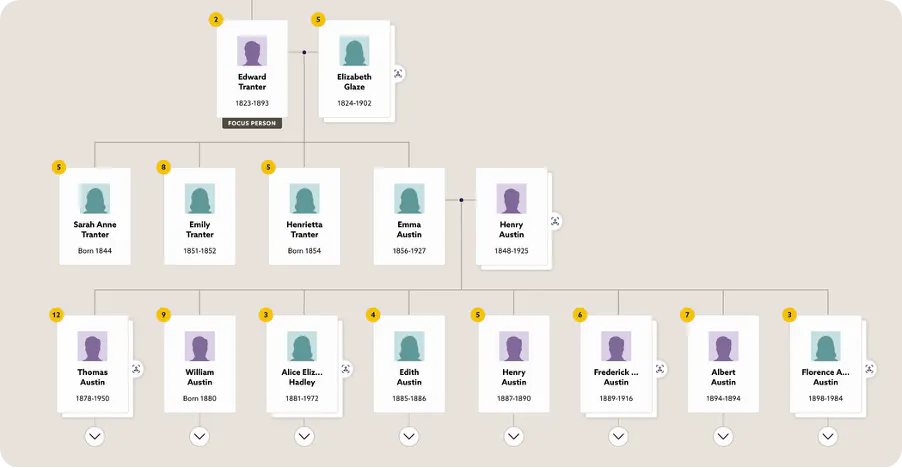
The Austin family tree on Findmypast.
Together, their story spans more than half a century.
Elizabeth first appears in the census as a china painter in 1861. Forty years later, she was still identified by the same trade. By 1871, Emma had begun learning the craft as an apprentice paintress, and years later Florrie followed in her family's footsteps.

Elizabeth and Emma as painters on the 1871 Census. View the full record here.
These women weren't simply employed at the same factory. They inherited skills, experience and opportunities from one another.

An advert for a foreman to manage Coalport’s team of paintresses, likely including the Tranter and Austin women, from Staffordshire Sentinel, Wednesday, 10 August 1881.
Their working lives became entwined with the future of Coalport itself.
The skilled hands behind Coalport’s success
Coalport china became famous around the world for its quality and craftsmanship.
Decorating china required patience, accuracy and years of practice. The finished products were admired and collected, yet the women responsible for creating them were rarely acknowledged. Contemporary accounts noted that many Coalport artists never signed their work.
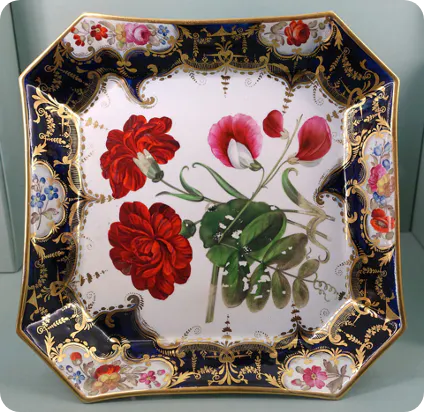
An example of the intricate, skilled work of the Coalport paintresses on this botanical dessert service from the 1830s-1840s. By Daderot - Own work, Wikimedia Commons, Public Domain, https://commons.wikimedia.org/w/index.php?curid=60240284
At home, life was rarely simple. The census records reveal busy households where the kettle whistled and laundry blew in the breeze. This paid work existed alongside domestic responsibilities, with women balancing employment and family life in ways that rarely feature in traditional accounts of industrial Britain.
These women weren’t alone
The Austin family's experience was far from unique.
The Moreton sisters of Madeley also worked at the local china factory, while Sarah Ann Ball supported herself as a tobacco pipe maker and single mother. Across Ironbridge's communities, women earned wages, developed specialist skills, and contributed to local industries in countless ways.
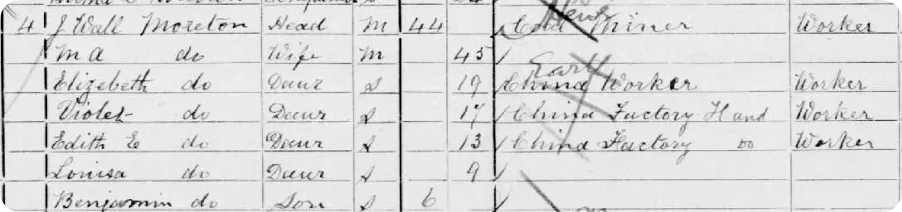
The Moreton sisters on the 1901 Census.
Incredibly, Violet Moreton was still working as a paintress in 1950 – she began her career as a young woman.
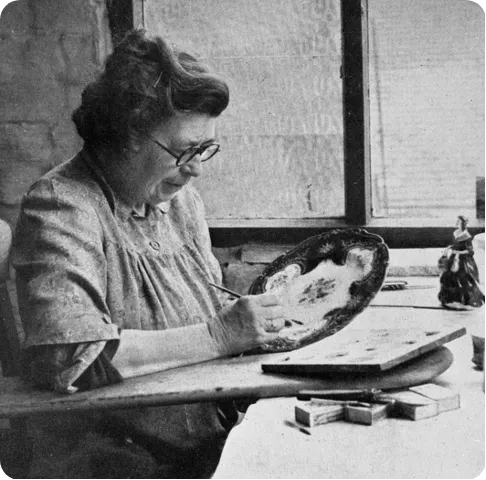
Violet Moreton, pictured in 1950. Image from National Trust Ironbridge Gorge.
Their stories challenge the idea that industrial history belongs solely to men.
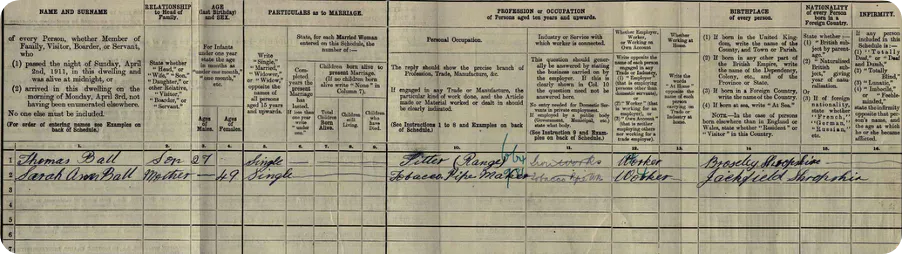
Sarah Ann Ball in the 1911 Census.
These families survived and their communities grew because women worked. Entire generations learned trades that helped sustain local economies.
But this way of life wasn't to last
When Coalport China Works closed in the 1920s, hundreds of jobs disappeared and a way of life that had been passed from generation to generation came to an abrupt end. Skills that mothers had taught daughters for decades suddenly had no obvious place in the community where they had been developed.
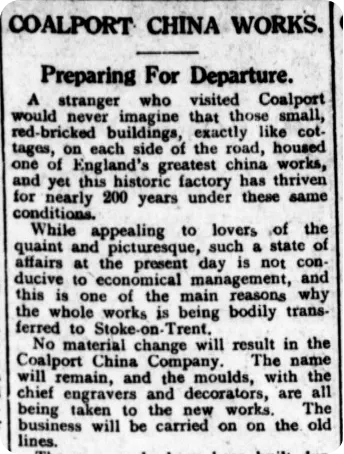
The Coalport factory closed in 1926, as reported in Shrewsbury Chronicle, 2 April 1926.
By then, many of the women who had helped build Ironbridge's industrial communities were already fading from view.
Discover the real women behind Ironbridge's story
The Austins, the Moretons, and Sarah Ann Ball are just a handful of the women whose stories can still be uncovered today.
Thousands more remain hidden within census returns, newspapers, and family records, waiting to be rediscovered.
In Rise, Power and Ruin: A Family History Of... The Industrial Revolution, we explore the lives behind the furnaces, factories, and famous landmarks, uncovering the families, communities and women who helped shape the birthplace of the Industrial Revolution.
Listen to the podcast to discover the stories history almost forgot.
Header image credit: Ironbridge Gorge, National Trust – Burnishers at Coalport China Works, 1906.