Your county-by-county guide to Ireland's genealogy records
8-9 minute read
By The Findmypast Team | April 15, 2026
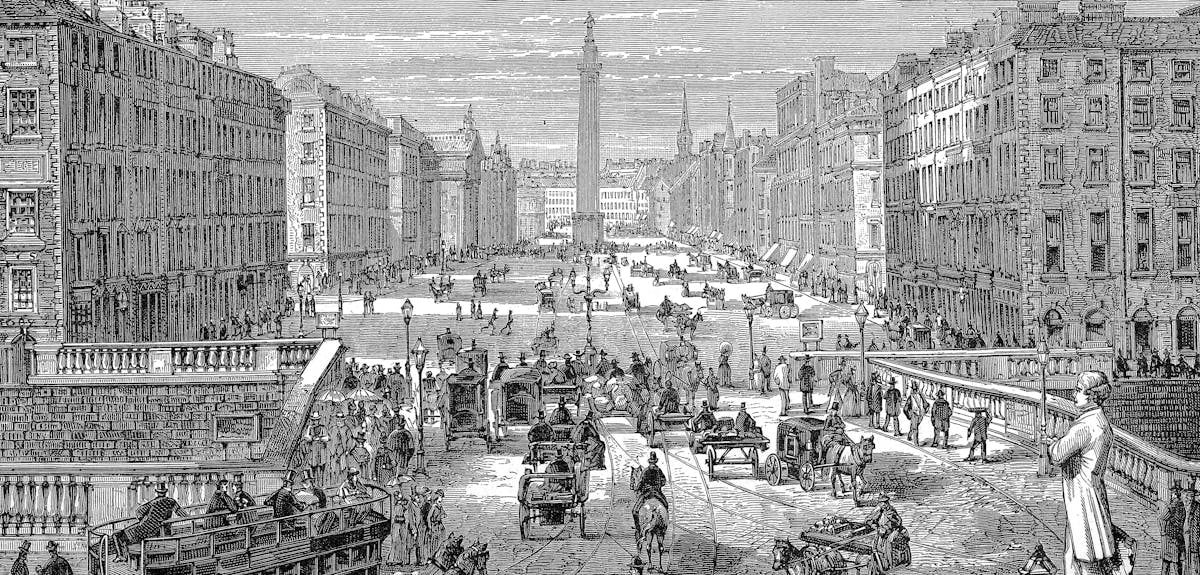
Genealogy in Ireland often gets a reputation for being a bit of a puzzle. But with the right information to hand and a few helpful signposts, the journey becomes far more manageable. Here's your companion to the winding trails of Irish family history.
Before you begin, hold onto one golden rule: the more detail you gather before diving into Irish records, the better your chances of success. Names, dates, birthplaces, siblings, parents. Even the smallest scraps can be the missing clue you need.
To help you explore your Irish family history, we've put together this handy guide. It'll take you on a whistlestop tour of Ireland, suggesting some key record collections you should look at for each county.
Getting to grips with Ireland's genealogy records
Irish records expert Brian Donovan talks you through the best resources for tracing Irish ancestors in the video masterclass below. Links to many of the collections he discusses (and more besides) are posted below in our county-by-county guide to Irish family history records.
Here are our favourite country-wide resources not to miss when researching your Irish ancestry:
- Petty Sessions Court Registers
- Dog Licence Registers
- Roman Catholic Baptisms, Marriages & Burials
- The 1901 and 1911 Ireland Census
- Griffiths Valuation
- Irish newspapers
Ireland is divided into four provinces: Connacht to the west, Leinster to the east, Munster to the south, and Ulster to the north. Each province holds its own history, its own rhythms, and its own kinds of record, all waiting to be explored.
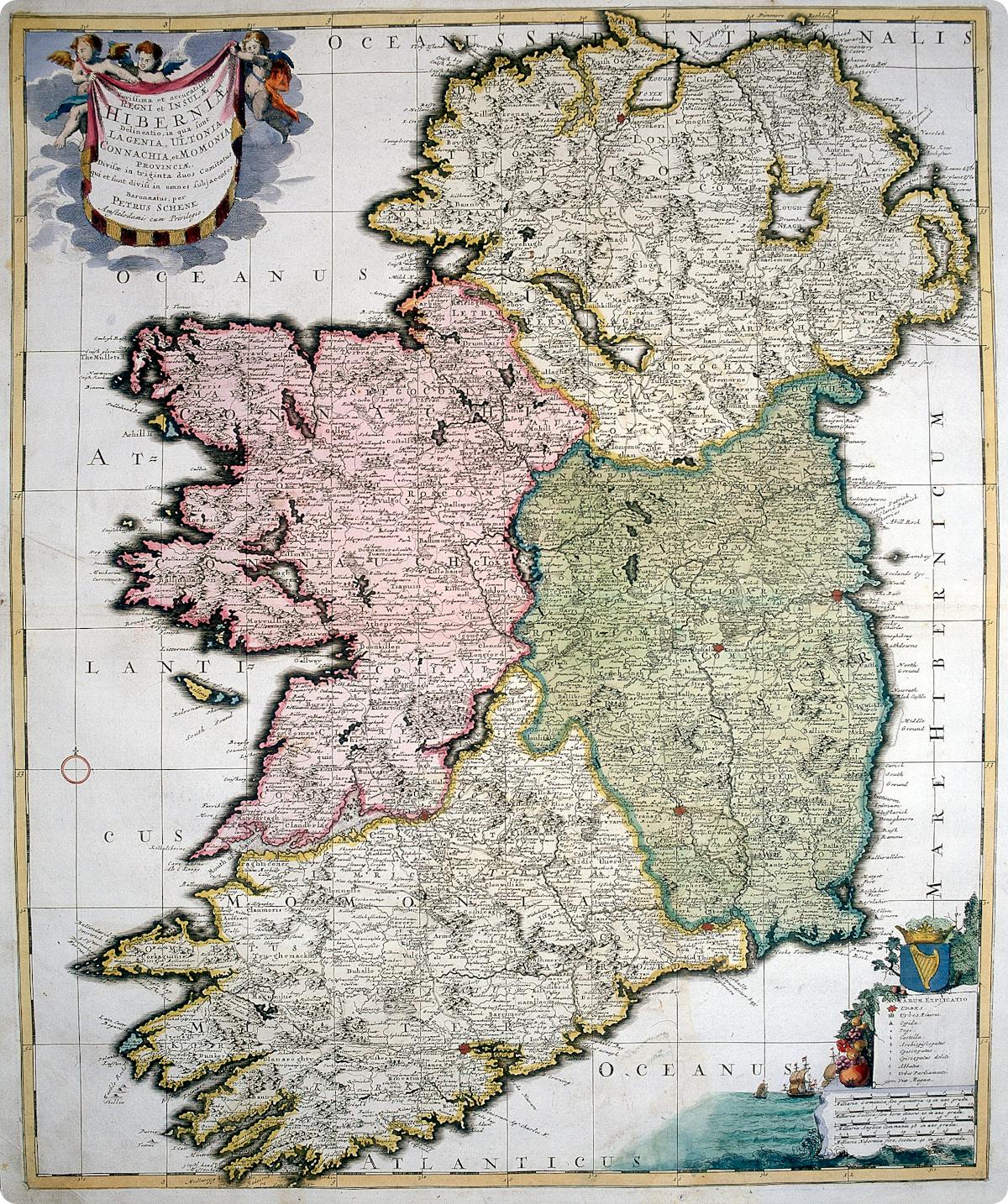
The four provinces of Ireland.
Within those four provinces, there are a total of 32 counties. Here's a quick rundown on the records that will be helpful in your quest to find family connections in each county.
Connacht genealogy
Atlantic winds, rural roots, and some of Ireland’s most elusive records.
Connacht lies to the west of Ireland, with most of its counties touching the Atlantic Ocean coastline. There are five counties in Connacht - Galway, Leitrim, Mayo, Sligo, and Roscommon.
- Galway genealogy records: Try starting with resources like Memorials of the Dead: Galway & Mayo for burial information, or the Poverty Relief Loans 1821–1874 for a glimpse into everyday lives. There are also over 188,000 Galway Poor Law Union records to explore. These can help trace family members who slip through more conventional sources.
- Leitrim genealogy records: One of Ireland’s quietest counties, but not short on clues. Search the Leitrim Cemetery Records or the wonderfully revealing Ireland Dog Licence Registers for Carrick‑on‑Shannon, Drumkeerin, Keshcarrigan and Kinlough.
- Mayo genealogy records: The previously mentioned Memorials Of The Dead: Galway & Mayo will help you track family members to Mayo. You'll also find hundreds of thousands of historical newspaper pages from the county online at Findmypast.
- Roscommon genealogy records: If you've got ancestors from Roscommon, they may be listed in our unique Ireland Roscommon Kiltullagh Cemeteries. And don't forget, your Roscommon family will also be covered in national collections like Irish Births 1864-1958.
- Sligo genealogy records: Exclusive to Findmypast, you could track some of your poorest ancestors in the Sligo Workhouse Admission and Discharge Registers 1848-1859. It's also worth searching Sligo Independent Newspaper, County Directory, Almanac and Guide (1889) and The Sligo Chronicle Almanac and Directory For 1878 for more ancestral leads from the county.
Search for stories in our newspapers and publications
Explore millions of digitised pages of newspapers and other publications from our British and Irish collections, dating as far back as the 1700s.
Leinster genealogy
Located in the east and midlands of Ireland, Leinster is the most populous area of the country. Does your family descend from any of Leinster's 12 counties?
Carlow, Dublin, Kildare, Kilkenny, Laois, Longford, Louth, Meath, Offaly, Westmeath, Wexford, and Wicklow make up the province.
- Carlow genealogy records: Explore our archive of historical Carlow Post newspaper pages to find out more about your Carlow ancestry. This county was badly hit by the Great Famine of Ireland during the 19th century, so be sure to also try our Irish Famine Immigrants, 1846-1851 collection, which details those who left Ireland behind for the United States at the time.
- Dublin genealogy records: Ireland's capital is steeped in rich history, as are the stories of your family members who came from there. You'll find Dublin ancestors in millions of records on Findmypast. Highlights include our exclusive Dublin Workhouses Admission & Discharge Registers 1840-1919 and the intriguing Dublin Metropolitan Police Prisoners Books 1905-1908 and 1911-1918.
- Kildare genealogy records: Our extensive collection of Irish Catholic Parish Registers covers 23 parishes in County Kildare and dates as far back as the 1770s. You'll also find a rich archive of newspapers from Kildare online at Findmypast.
- Kilkenney genealogy records: There are many unique resources you can use to find Kilkenny ancestors. Try George Bassett, Kilkenny City and County Guide and Directory (1884) and Kilkenny Registers & Records, for example. The latter includes a summary of the town of Castlecomer in Ireland's 1901 census.
- Laois genealogy records: Formerly known as Queen's County, Laois was home to Maryborough and Queen’s County prisons hundreds of years ago. You'll see their prisoners listed in Irish Prison Registers 1790-1924, perfect for tracing the black sheep in your Laois family.
- Longford genealogy records: The ever-popular Irish Petty Sessions Court Registers include seven courts from County Longford. They'll tell you why your Longford ancestors were hauled in front of their neighbourhood magistrate, as well as vital family tree information like names and addresses.
- Louth genealogy records: Just because Louth is Ireland's smallest county, there is no lack of resources you can use to trace your family there. George Bassett, Louth County Guide and Directory (1886) gives an insight into what life was like in Louth during the Victorian period, while Ireland National School Registers cover four of the county's now-defunct primary schools from yesteryear.
- Meath genealogy records: Ireland's Royal County isn't all about noble ancestors and blue bloodlines. Griffith's Valuation 1847-1864 is one of the main record collections used to pinpoint families in 19th-century Ireland and includes over 57,000 entries from County Meath. A similar substitute land collection, the Landed Estates Court Rentals 1850-1885, features over 18,000 records from the county.
- Offaly genealogy records: You might find Offaly described as King's County in family records. Its name changed after Ireland was partitioned from the UK in the 1920s. Either way, there are plenty of chances for you to discover Offaly ancestors on Findmypast. For starters, try the remnants of Ireland Census 1821-1851. The 1821 census survives for large parts of County Offaly.
- Westmeath genealogy records: As you might have guessed, this county lies directly to the west of County Meath. Over 28,000 of our exclusive Irish Quaker records relate to Westmeath. Plus, the countrywide Catholic Church registers cover 27 Westmeath parishes dating as far back as 1737 in Mullingar.
- Wexford genealogy records: Try the George Bassett, Wexford County Guide and Directory (1885) in your search for Wexford ancestry. Cantwell's Memorials Of The Dead also includes over 36,000 records from the Model County.
- Wicklow genealogy records: The 'Garden of Ireland' has an abundance of genealogy records available for you to delve into. Our Wicklow Cemetery Records and Wicklow Registers & Records are just two of the many collections that might feature your Wicklow family.
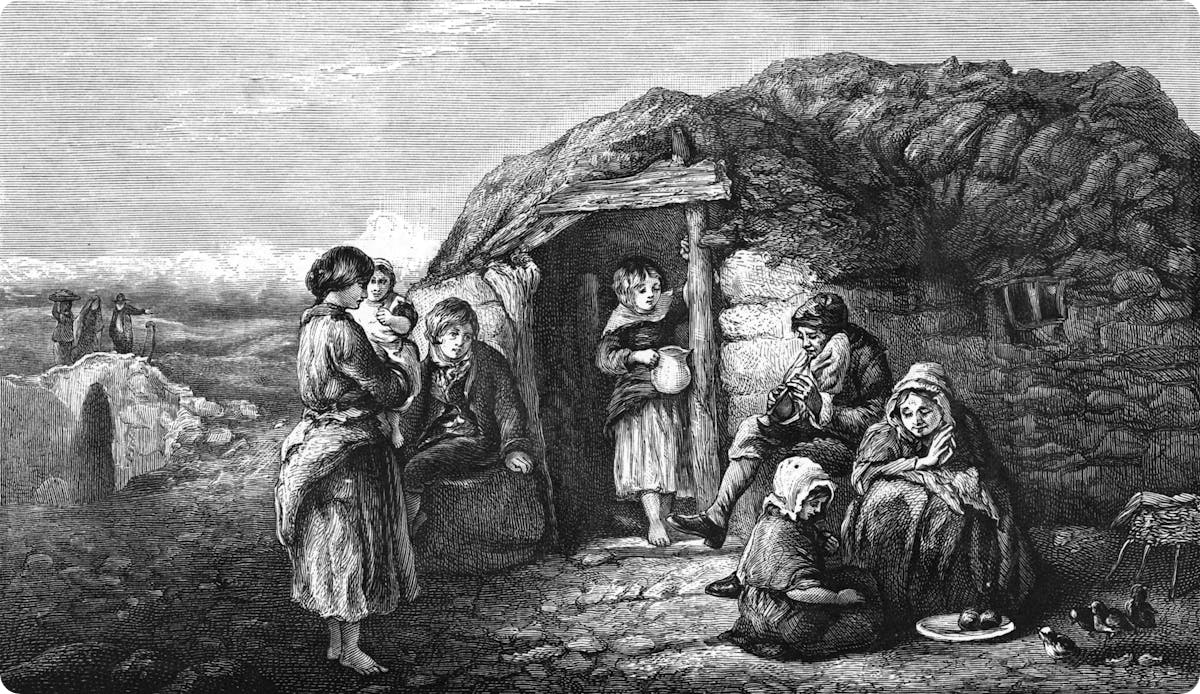
An engraving of an Irish peasant cabin.
Munster genealogy
Six counties filled with coastal stories, agricultural histories, and global migrations. Here's where to find family stories from Clare, Cork, Kerry, Limerick, Tipperary, and Waterford.
- Clare genealogy records: Findmypast is home to some exclusive Clare family history collections, making us the go-to destination for tracing your roots there. For example, you won't find these Clare Electoral Registers or Clare Poor Law Unions Board Of Guardians Minute Books anywhere else online.
- Cork genealogy records: Southern Ireland's biggest city and county was also home to one of the biggest emigration ports of the past. That's why you'll find over 800,000 entries for Queenstown (known as Cobh today) listed in our Passenger Lists Leaving UK 1890-1960. Another useful source of Cork family history is Henry & Coughlan's General Directory Of Cork and Munster For 1867.
- Kerry genealogy records: The 'Kingdom' of Kerry was (and still is) one of Ireland's most rural counties. Our Kerry Histories & Reference Guides will paint a picture of what life was like for your ancestors in Kerry, while you'll find a detailed population list for the county in Ireland's oldest fully surviving census from 1901.
- Limerick genealogy records: Ireland Valuation Office Books contain over 163,000 records from Limerick. This collection covers a period where little or no census records exist for the county, so it could prove really useful as you search for Limerick ancestors. Guy's Limerick Directory, 1912 can also help you trace Limerick roots. It lists names, addresses and sometimes occupations, ideal information for your family tree.
- Tipperary genealogy records: As the song goes, "it's a long way to Tipperary", so thankfully, you won't need to travel there to explore the county's records. National collections cover this vast county, such as the Ireland Census 1911, which features over 152,000 Tipperary household records.
- Waterford genealogy records: Search for your Waterford ancestors in our exclusive Waterford Poor Law Union Board Of Guardians Minute Books or delve into the eclectic mix of resources in Waterford Registers & Records.
Ulster genealogy
Nine counties, two jurisdictions, and a landscape shaped by movement, faith, and industry. Ireland's North is made up of Antrim, Armagh, Cavan, Donegal, Down, Fermanagh, Derry-Londonderry, Monaghan, and Tyrone.
Three of those counties (Cavan, Donegal and Monaghan) are part of the modern-day Republic of Ireland, while the other six are part of the United Kingdom in Northern Ireland.
When researching ancestors in the wider province, try exploring collections such as the Ireland, Belfast & Ulster Directories and the Ulster Covenant.
- Antrim genealogy records: You'll uncover over 100,000 Antrim records in Ireland Calendars Of Wills & Administrations 1858-1920, while The Belfast and Province Of Ulster Directory For 1856 will help you learn more about the fascinating history of Northern Ireland's capital city.
- Armagh genealogy records: George Bassett, The Book Of County Armagh (1888), not only helps you find Armagh ancestry, but it also provides a well-rounded view of life in the county back in Victorian times. You can also scour over a million historical newspaper articles from Armagh on Findmypast.
- Cavan genealogy records: If your family hails from County Cavan, try searching for them in Cavan Registers & Records, which includes the 1821 Census for the parish of Crosserlough. Of course, Cavan is also covered in national record collections. For example, there are over 5,000 Cavan entries in our Royal Irish Constabulary Service Records 1816-1922.
- Donegal genealogy records: Often dubbed 'The Forgotten County' due to its remote location in the North West of Ireland, Donegal is anything but neglected on Findmypast. Donegal Workhouses Registers and Minute Books span from 1840 to 1922 and include over 400,000 records of Donegal ancestors. You can both search and browse this extensive resource. Plus, try the Grand Jury Presentments 1753-1899 and Cemetery Records.
- Down genealogy records: County Down ancestry? Trace it in George Bassett, County Down Guide and Directory (1886). You'll also find a collection of parish records from Annaclone on Findmypast, covering both the Church of Ireland and Roman Catholic faiths.
- Fermanagh genealogy records: If you've got roots in Fermanagh, our county collections of cemetery records and parish registers will help you piece together the puzzle of your family's past. And for an insight into 19th-century life in the Lakeland County, Macloskie's Directory Of Fermanagh 1848 is worth a look.
- Londonerry (Derry) genealogy records: The Register Of Derry Cathedral 1642-1703 is one of the oldest Irish record collections on Findmypast and includes over 33,000 records, making it perfect for taking your Londonderry (Derry) family research further back. Meanwhile, Ireland Billion Graves Cemetery Index contains over 23,000 burial records from the Oak Leaf county.
- Monaghan genealogy records: Our indexes of civil births, marriages and deaths hold over 700,000 records from County Monaghan combined. You'll also find Monaghan ancestors well-represented in Crossle Genealogical Abstracts, a unique resource compiled from the notebooks of Irish genealogists Dr Francis Crossle and his son Philip.
- Tyrone genealogy records: One of Northern Ireland's biggest counties has the record resources to match on Findmypast. Try searching for family members' final resting places in our collection of Tyrone Cemetery Records. Plus, the Ireland Census Search Forms 1841 & 1851 have almost 5,000 Tyrone records in them.
Delve deeper into your ancestors' stories
Understanding the world your Irish ancestors lived in is like adjusting the lighting in a dim room: suddenly, the shapes and shadows make sense. When you explore directories, workhouse registers, parish books, or local guides, you’re not just collecting facts; you’re stepping into the rhythm of their everyday lives. These records reveal the pressures they felt, the opportunities they chased, and the communities that shaped them.
And once you see the landscape they moved through — the industries that rose and fell, the parishes that anchored them, the migrations that changed everything — their story stops being a distant thread and becomes something real. It’s in that richer understanding that the gaps start to close, the choices they made become clearer, and the people you’re researching step forward as fully as they can across time.